Course progress · Jury 2026 · UDIT

Moments
in Spiral

Exploring intuitive resonance, memory and the butterfly effect through a woven textile.

01

Introduction

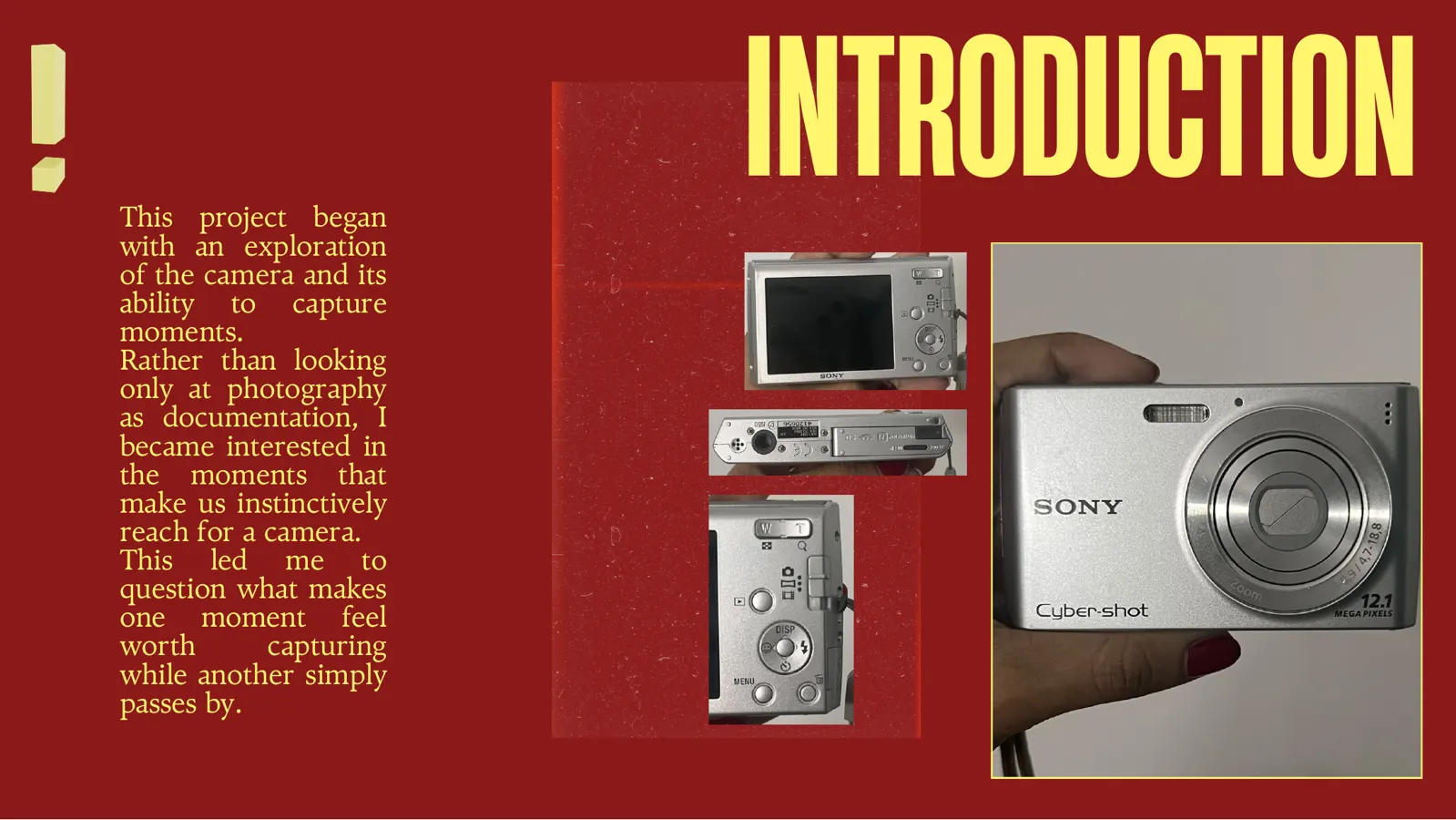
This project began with an exploration of the camera and its ability to capture moments. Rather than looking only at photography as documentation, I became interested in the moments that make us instinctively reach for a camera.

This led me to question what makes one moment feel worth capturing while another simply passes by.

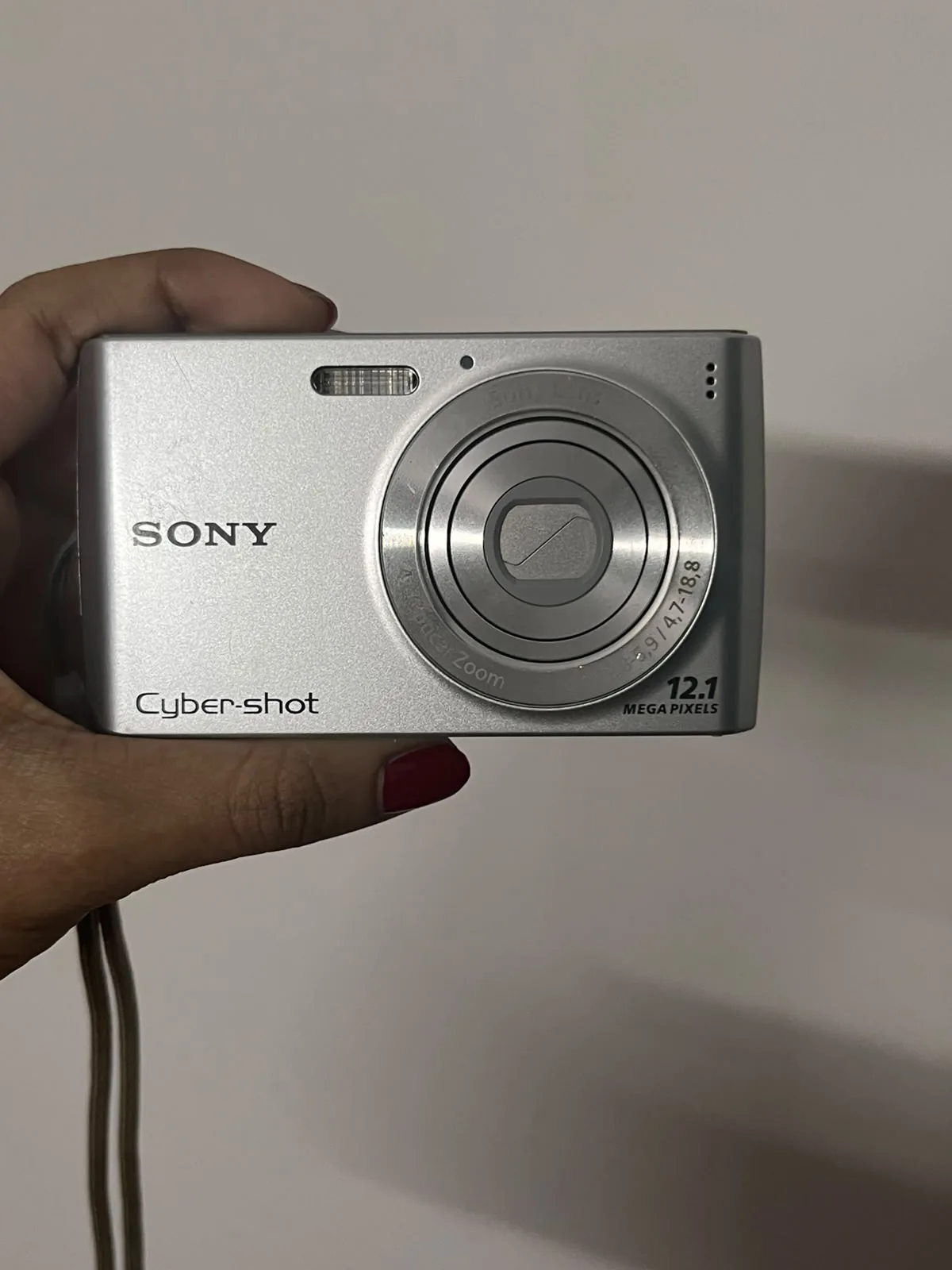
A hand holding a small silver Sony Cyber-shot point-and-shoot camera against a white wall.
The starting object: a compact digital camera.

02

Concept note

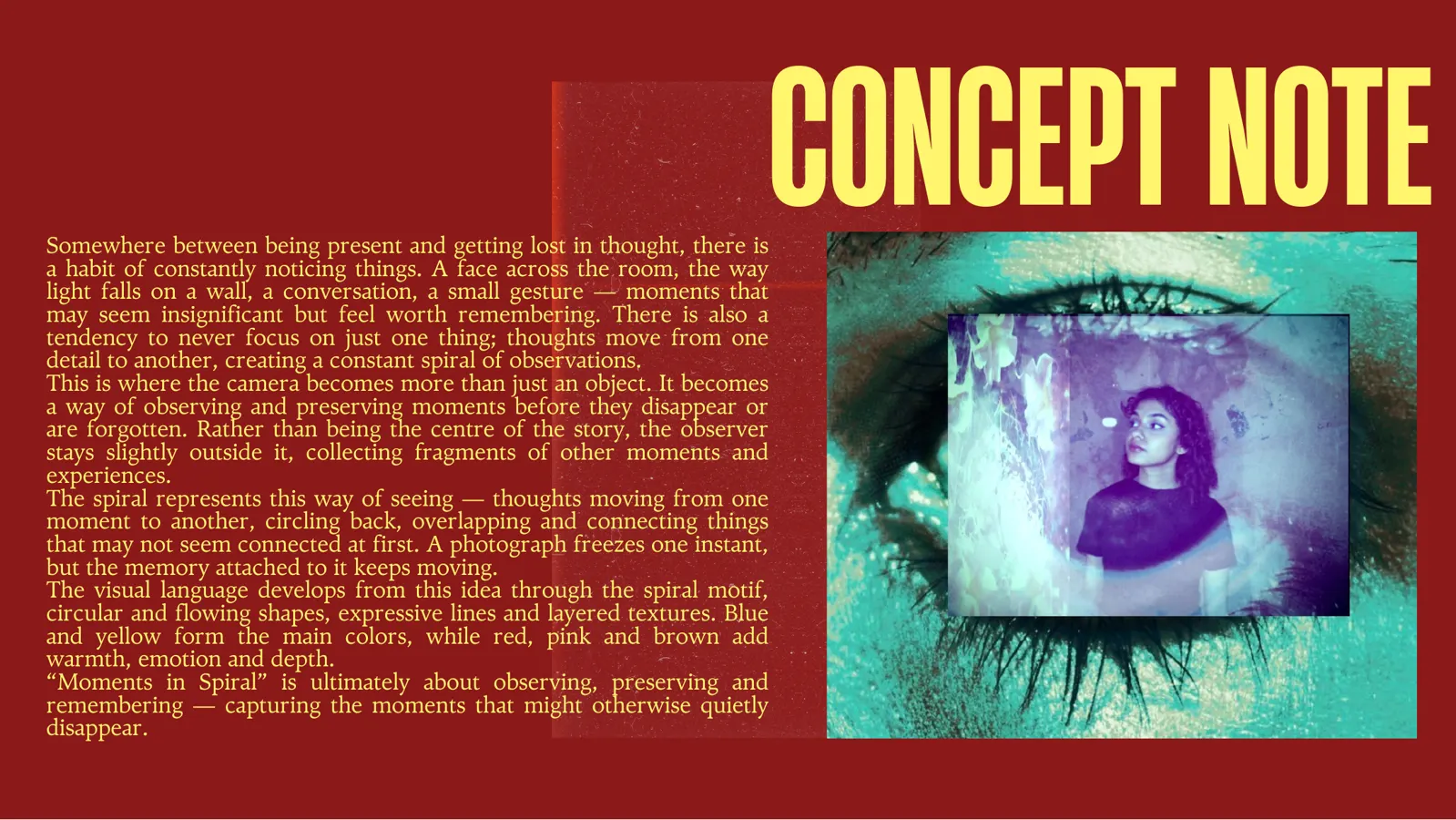
Somewhere between being present and getting lost in thought, there is a habit of constantly noticing things. A face across the room, the way light falls on a wall, a conversation, a small gesture. Moments that may seem insignificant but feel worth remembering. There is also a tendency to never focus on just one thing; thoughts move from one detail to another, creating a constant spiral of observations.

This is where the camera becomes more than just an object. It becomes a way of observing and preserving moments before they disappear or are forgotten. Rather than being the centre of the story, the observer stays slightly outside it, collecting fragments of other moments and experiences.

The spiral represents this way of seeing: thoughts moving from one moment to another, circling back, overlapping and connecting things that may not seem connected at first. A photograph freezes one instant, but the memory attached to it keeps moving.

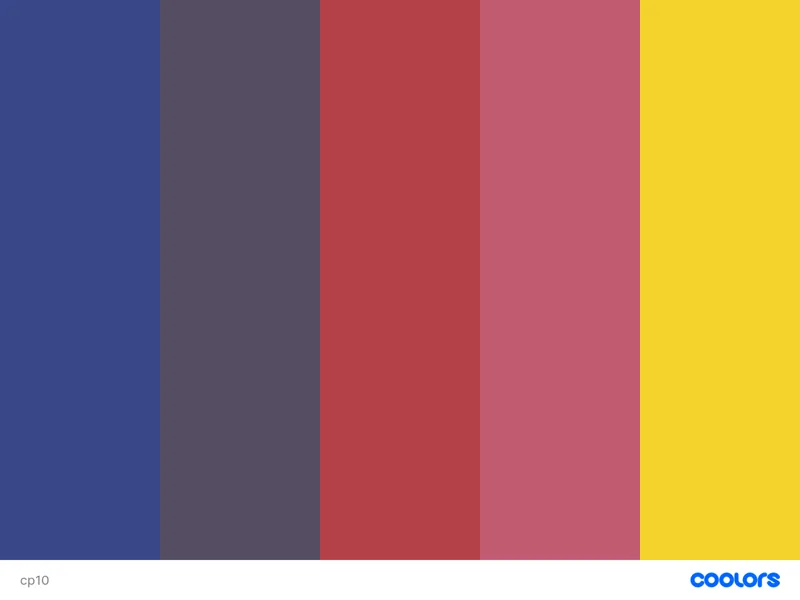
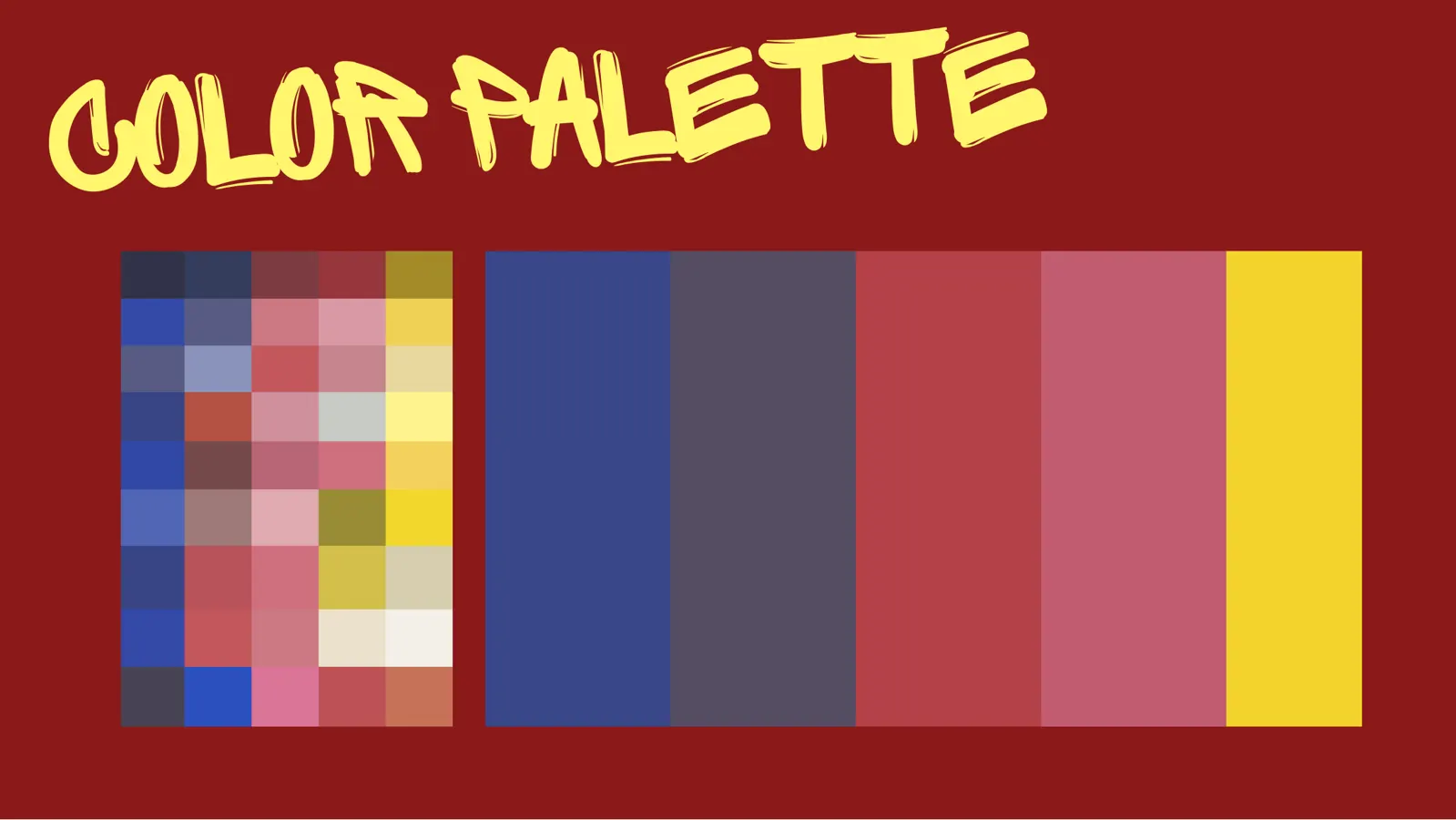
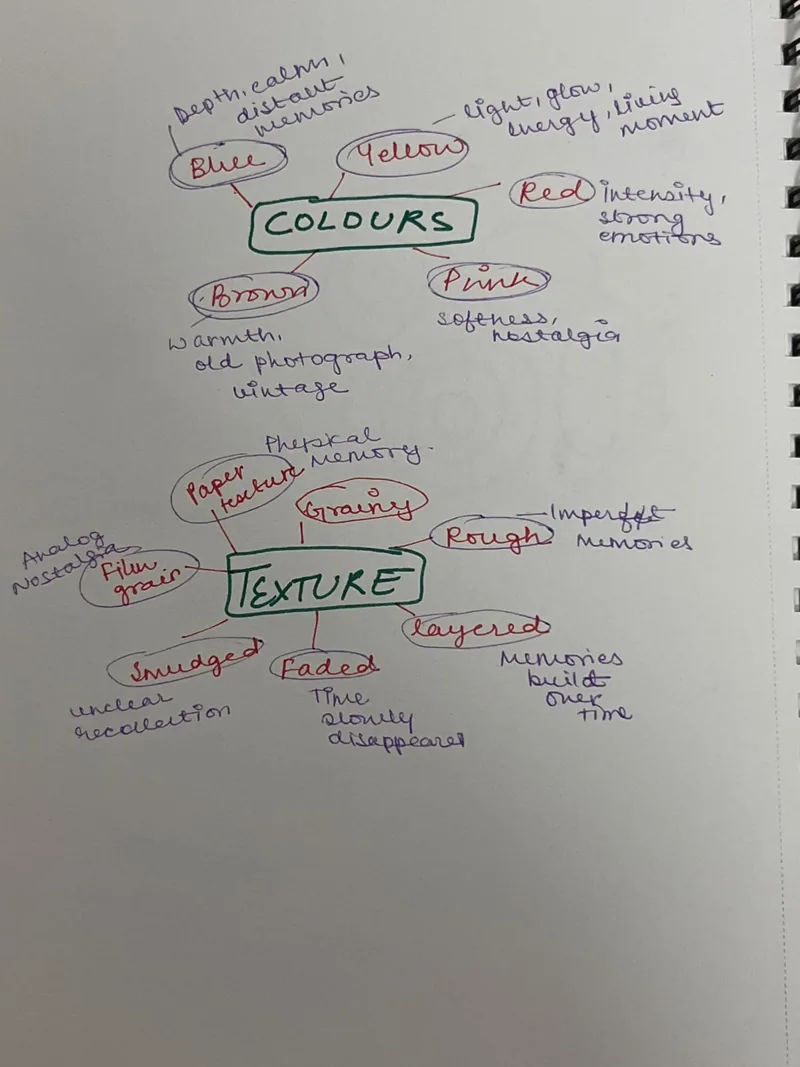
The visual language develops from this idea through the spiral motif, circular and flowing shapes, expressive lines and layered textures. Blue and yellow form the main colours, while red, pink and brown add warmth, emotion and depth.
03

The starting point

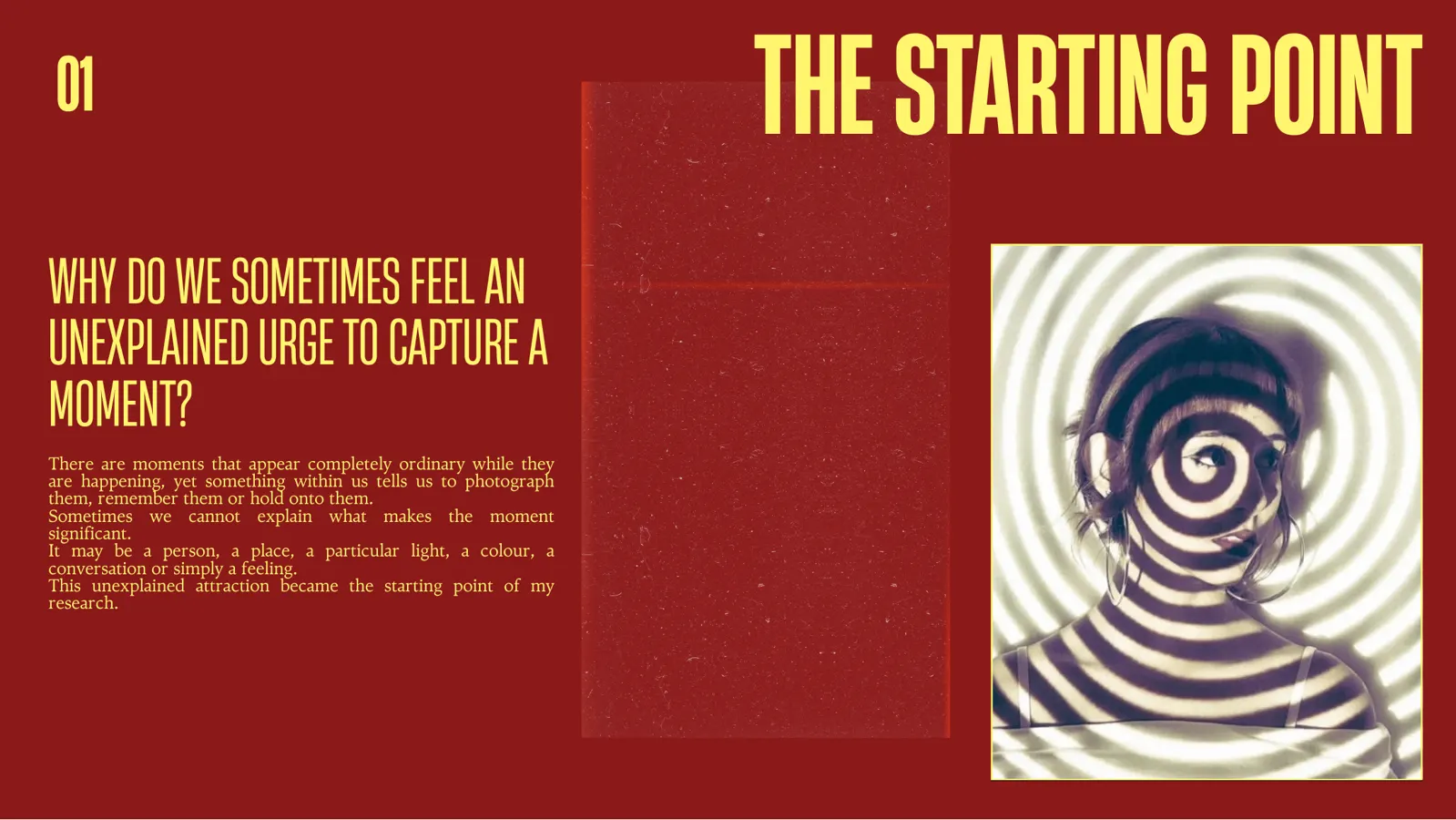
Why do we sometimes feel an unexplained urge to capture a moment?

There are moments that appear completely ordinary while they are happening, yet something within us tells us to photograph them, remember them or hold onto them. Sometimes we cannot explain what makes the moment significant. It may be a person, a place, a particular light, a colour, a conversation or simply a feeling.

This unexplained attraction became the starting point of my research.

04

From moments to spiral

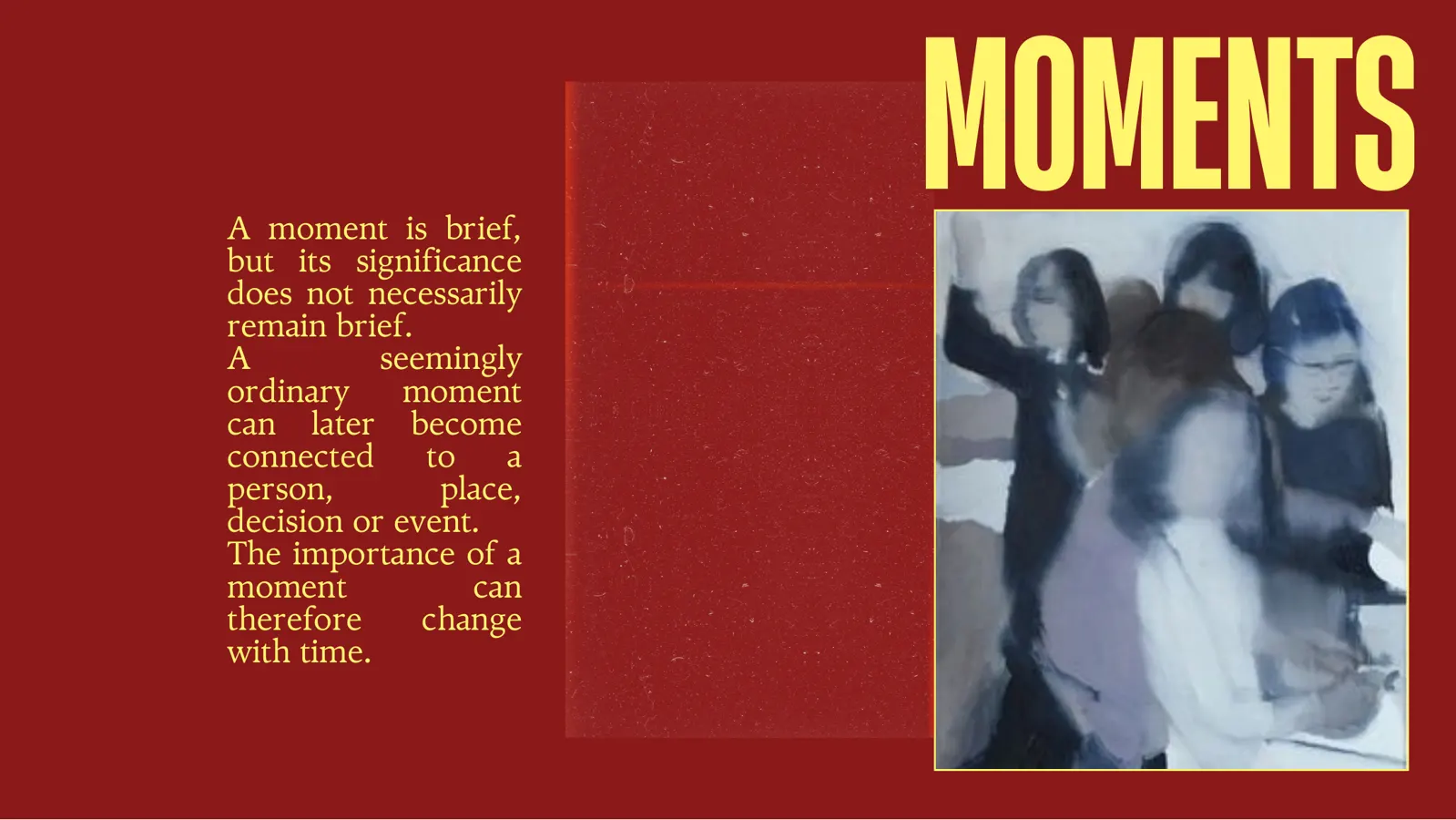
A moment is brief, but its significance does not necessarily remain brief. A seemingly ordinary moment can later become connected to a person, place, decision or event. The importance of a moment can therefore change with time.

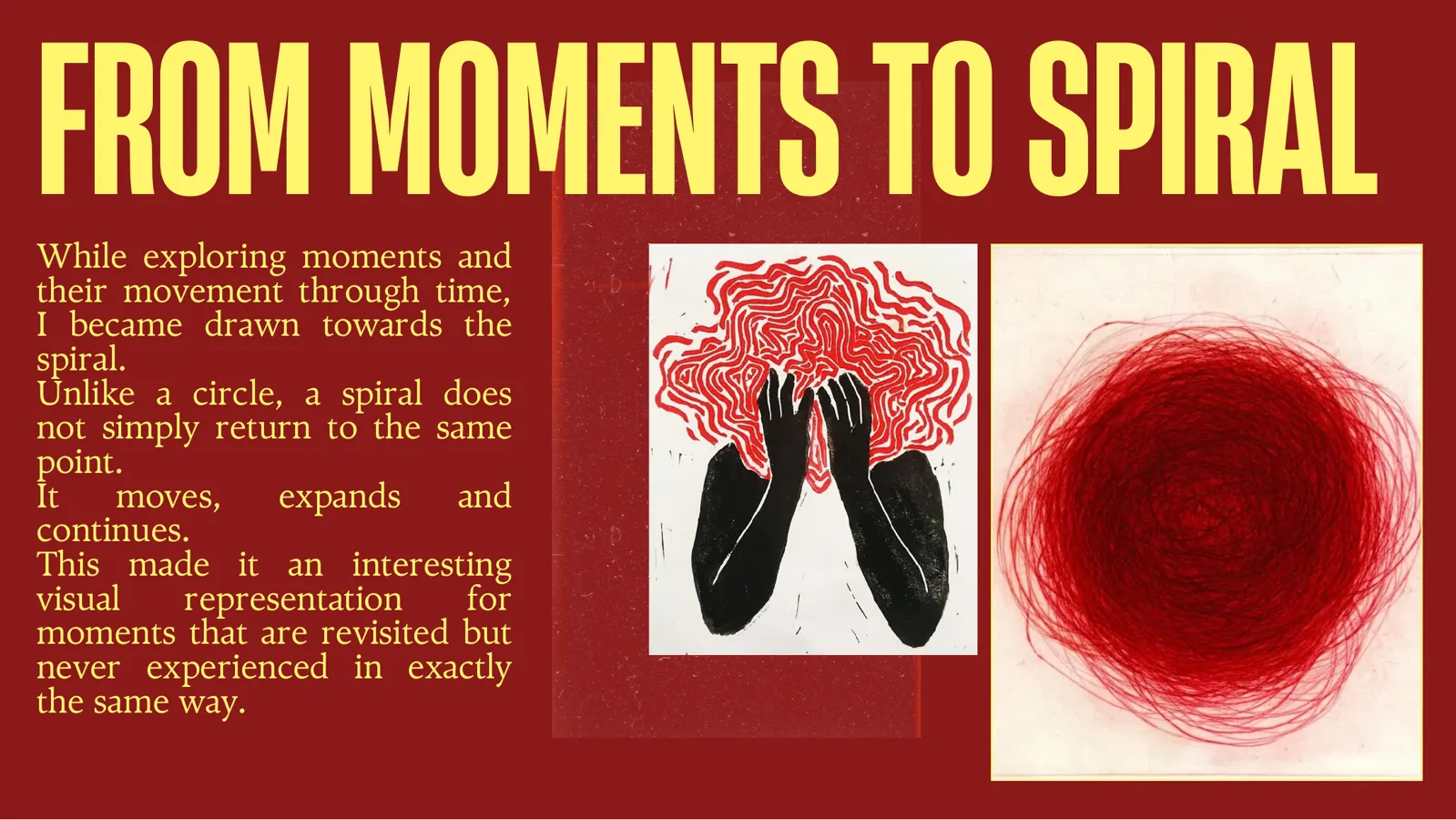
While exploring moments and their movement through time, I became drawn towards the spiral. Unlike a circle, a spiral does not simply return to the same point. It moves, expands and continues. This made it an interesting visual representation for moments that are revisited but never experienced in exactly the same way.

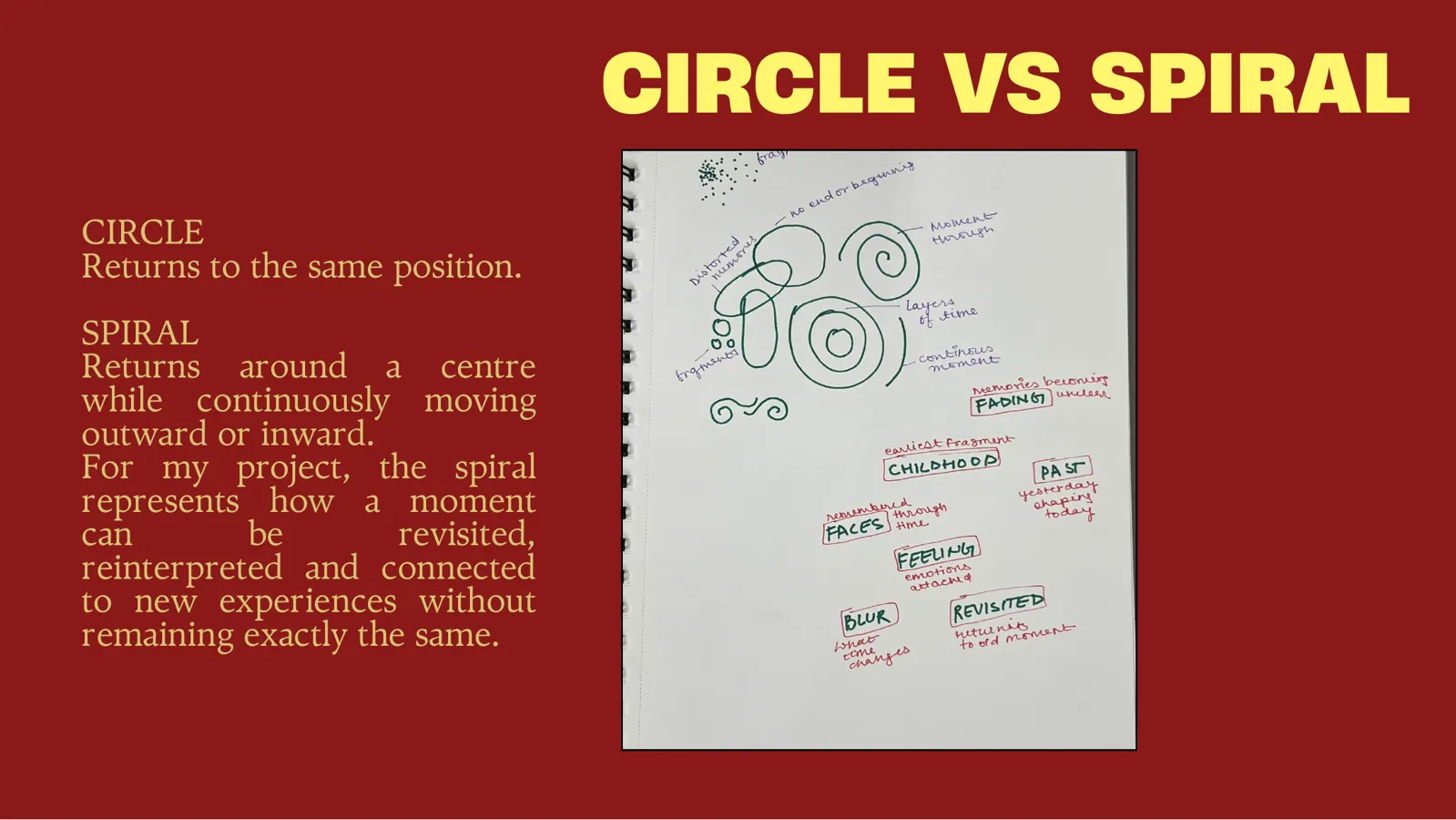
Circle

Returns to the same position.

Spiral

Returns around a centre while continuously moving outward or inward.

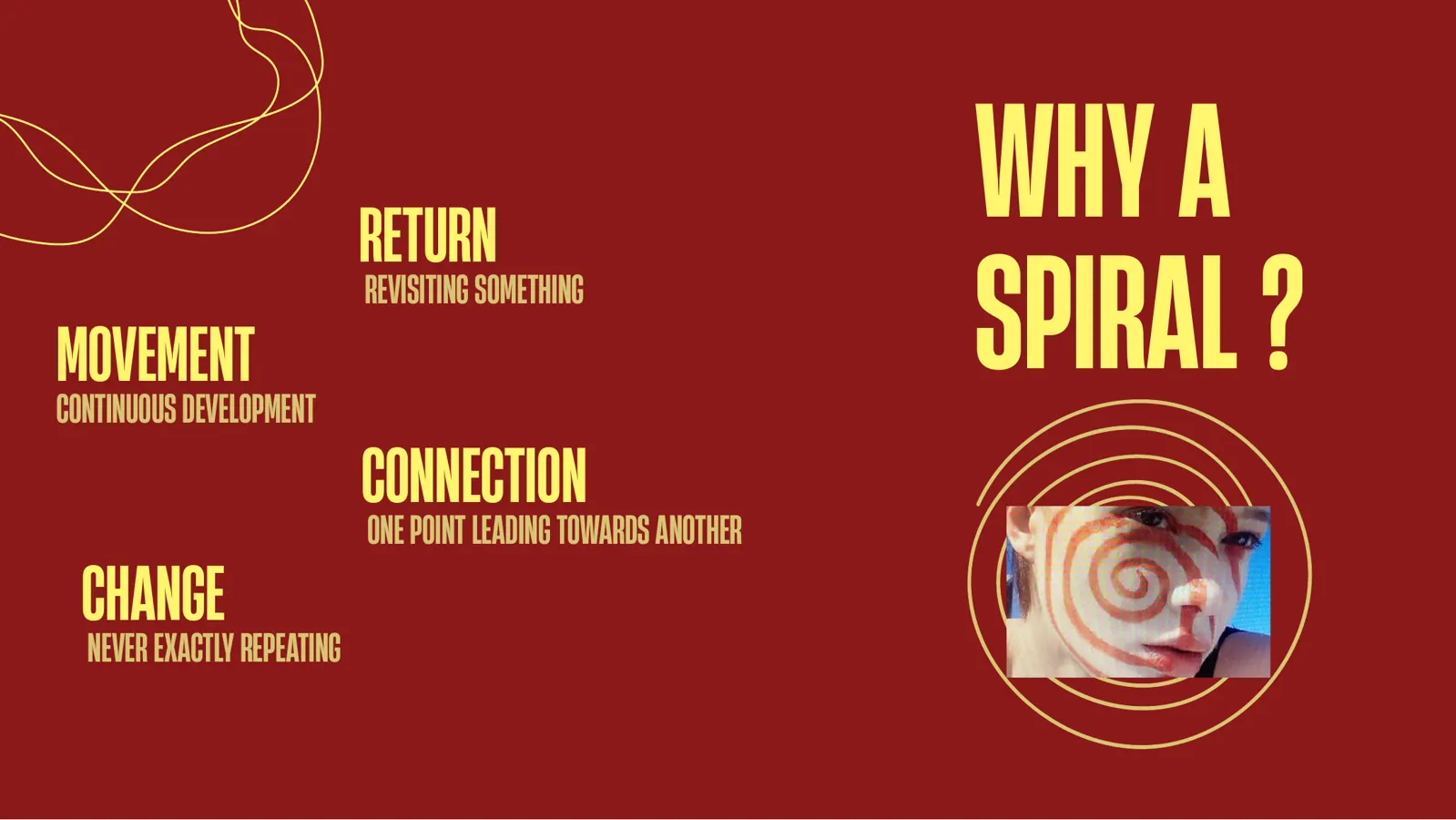
  • ReturnRevisiting something
  • MovementContinuous development
  • ConnectionOne point leading towards another
  • ChangeNever exactly repeating
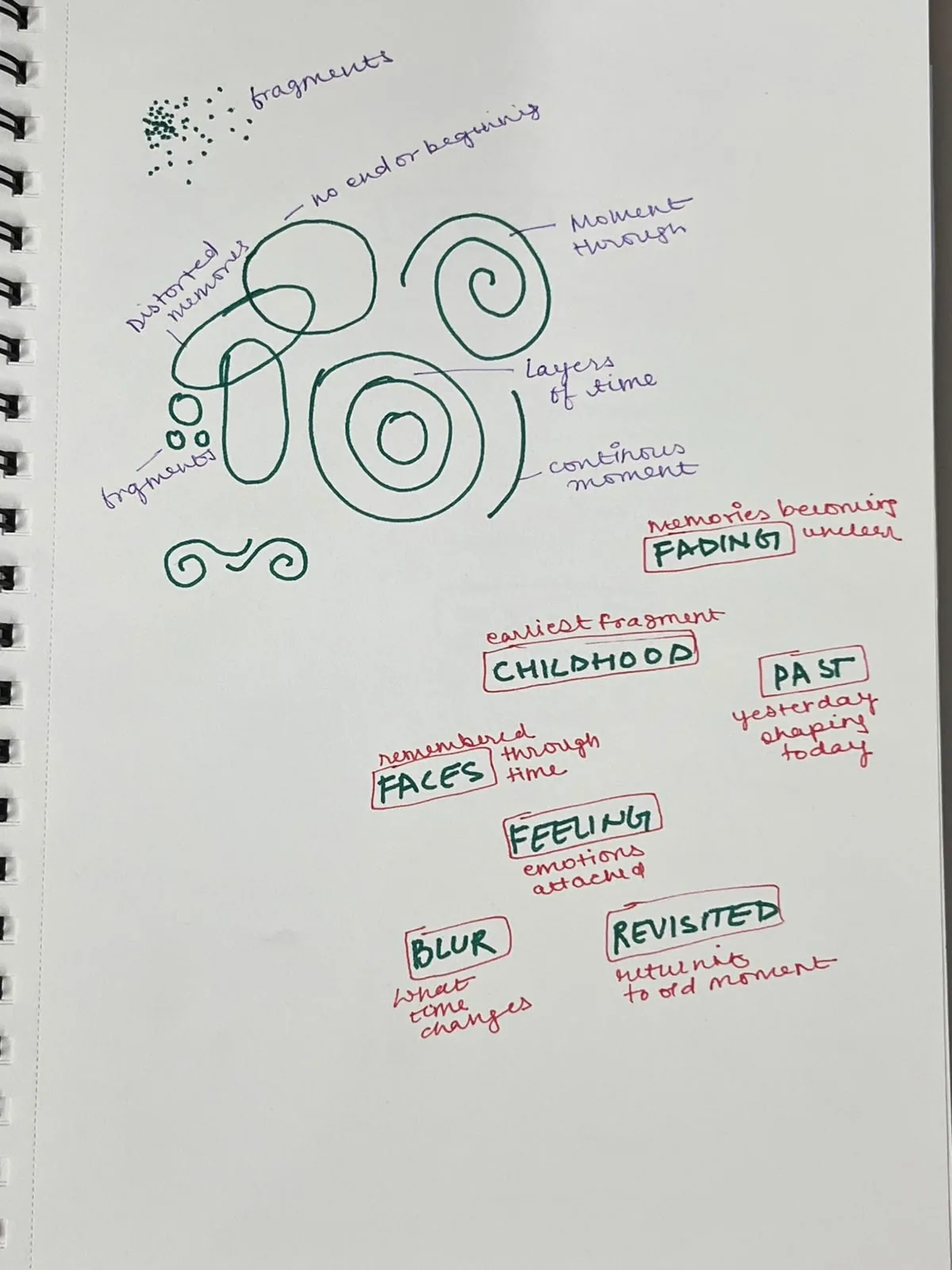
Sketchbook page comparing circles and spirals in green and black pen, with notes on return, movement and change.
Circle versus spiral, worked out in the sketchbook.

05

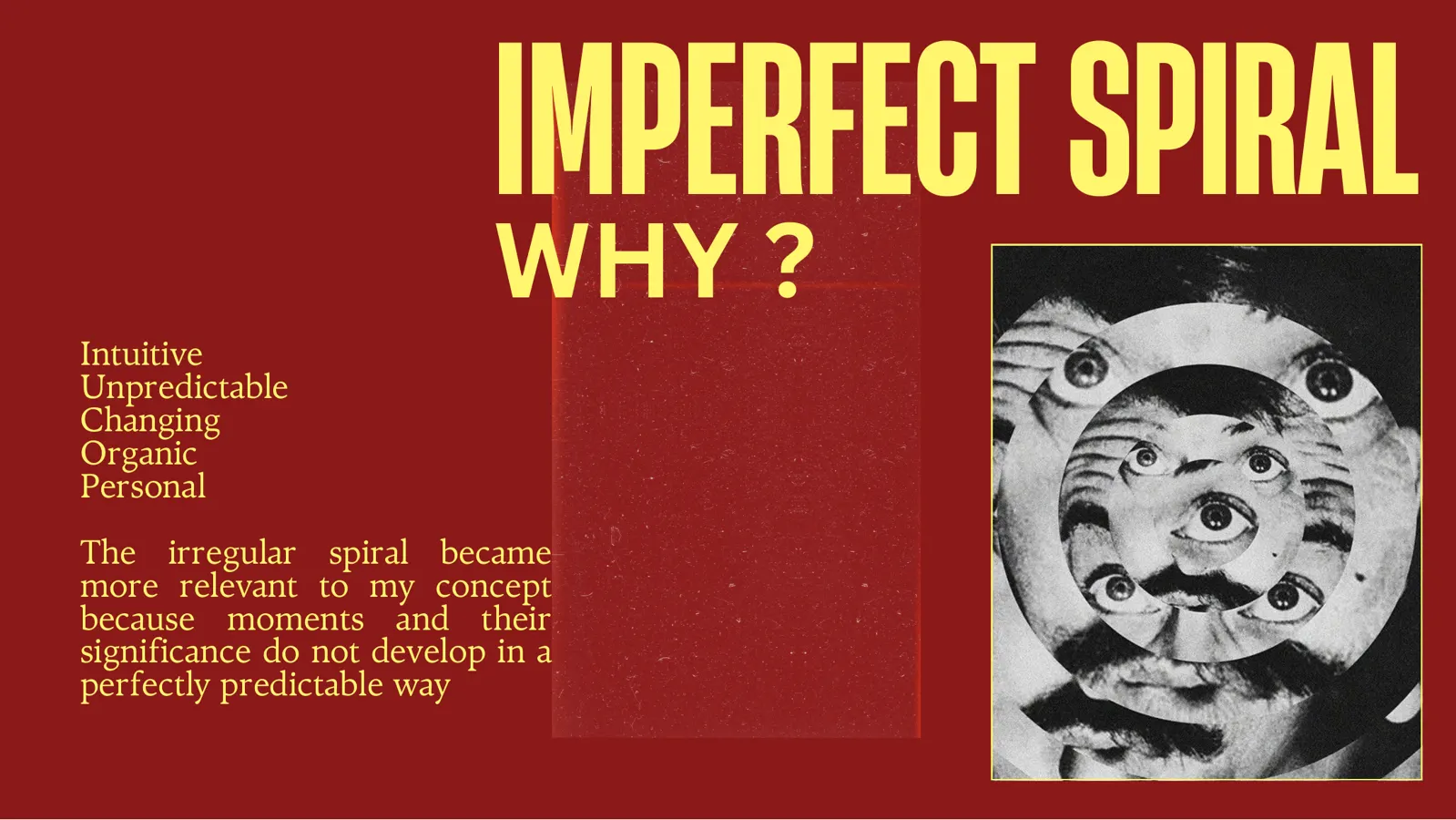
Imperfect spiral

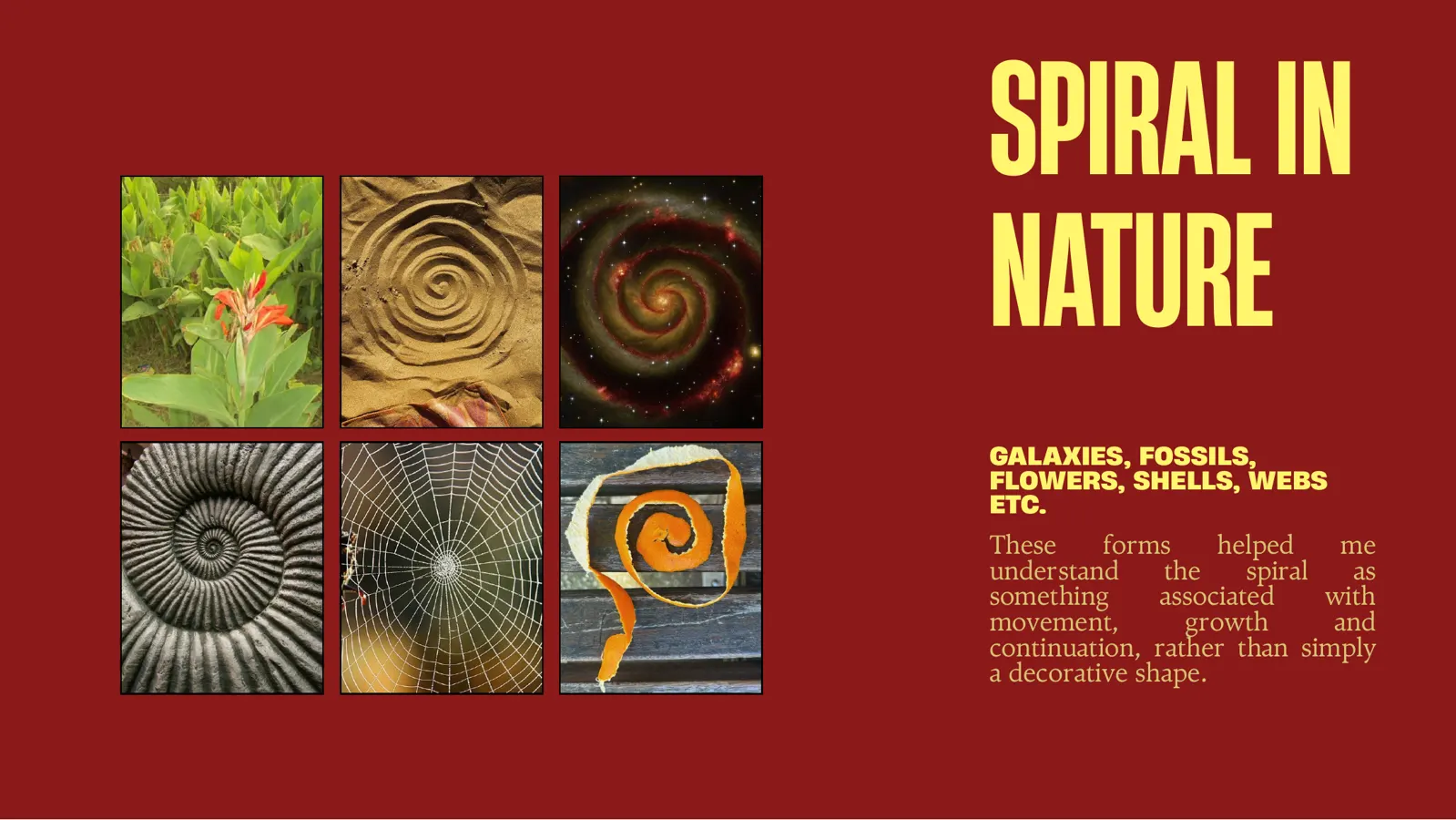
Spirals in nature, in galaxies, fossils, flowers, shells and webs, helped me understand the form as something associated with movement, growth and continuation rather than simply a decorative shape.

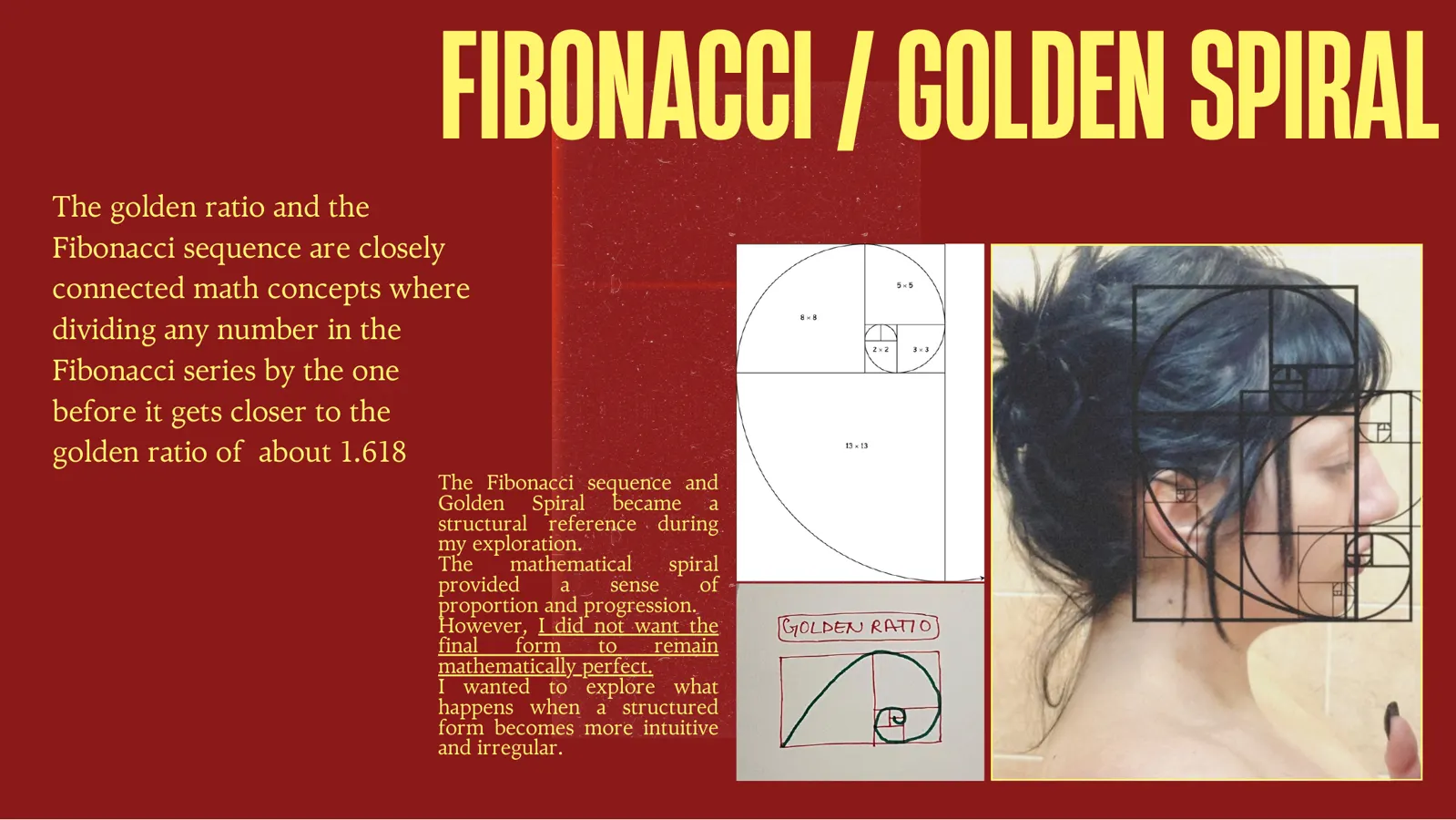
The Fibonacci sequence and the golden spiral became a structural reference. The mathematical spiral provided a sense of proportion and progression. However, I did not want the final form to remain mathematically perfect. I wanted to explore what happens when a structured form becomes more intuitive and irregular.

The irregular spiral became more relevant to my concept because moments and their significance do not develop in a perfectly predictable way.

IntuitiveUnpredictableChangingOrganicPersonal

06

Intuitive resonance

If a spiral represents the movement of a moment, what makes us notice that moment in the first place? This shifted my research from simply exploring what we capture to exploring why we feel compelled to capture it.

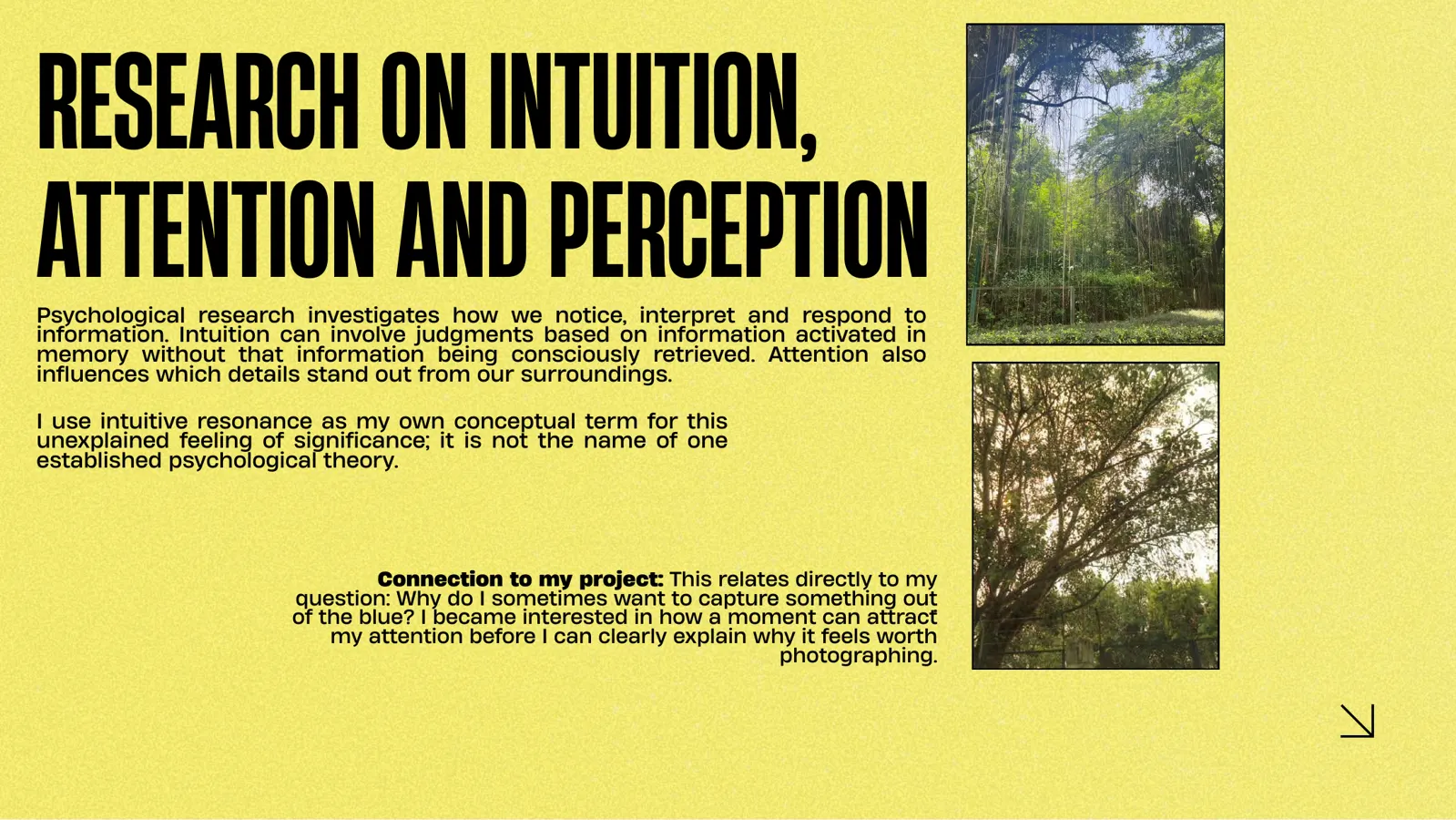
I use intuitive resonance to describe the immediate, unexplained feeling that something about a moment is significant. It happens before we can fully explain the reason. A moment simply feels like “I want to remember this” or “there is something about this.”

Our attention constantly filters the enormous amount of information around us. Certain details suddenly stand out: light, colour, movement, sound. Sometimes we notice something before we understand why we noticed it. This became an important part of my exploration.

Intuitive resonance is my own conceptual term for this feeling; it is not the name of one established psychological theory.

07

From intuition to connection

What happens when a small moment eventually connects to something much larger? A photograph, meeting, decision or coincidence may seem insignificant when it happens. But later, it can become part of a much larger chain of events. This led me towards the idea of the butterfly effect.

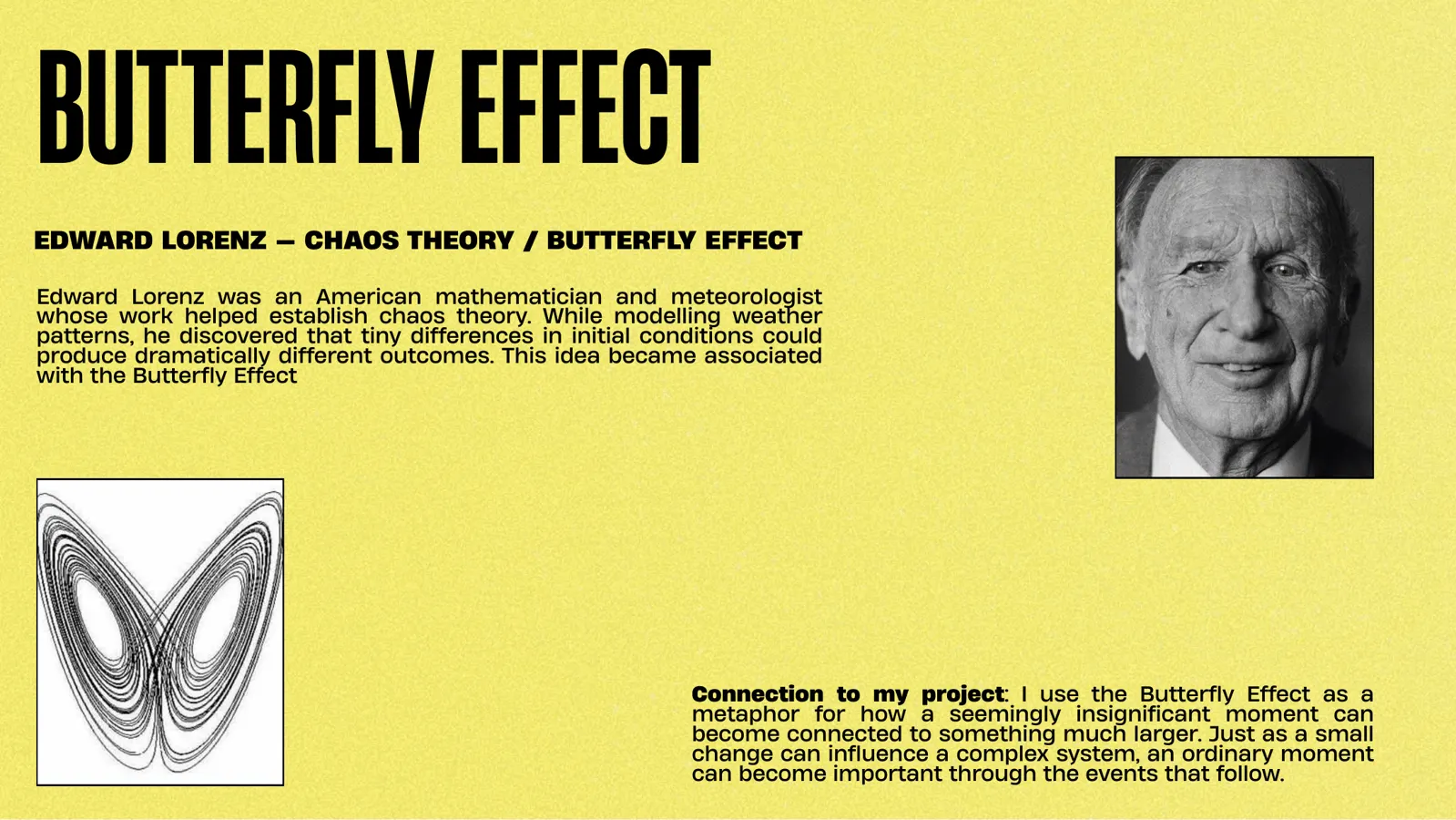
Edward Lorenz, while modelling weather patterns, discovered that tiny differences in initial conditions could produce dramatically different outcomes. I use the butterfly effect as a metaphor for how a seemingly insignificant moment can become connected to something much larger. Just as a small change can influence a complex system, an ordinary moment can become important through the events that follow.

Psychology

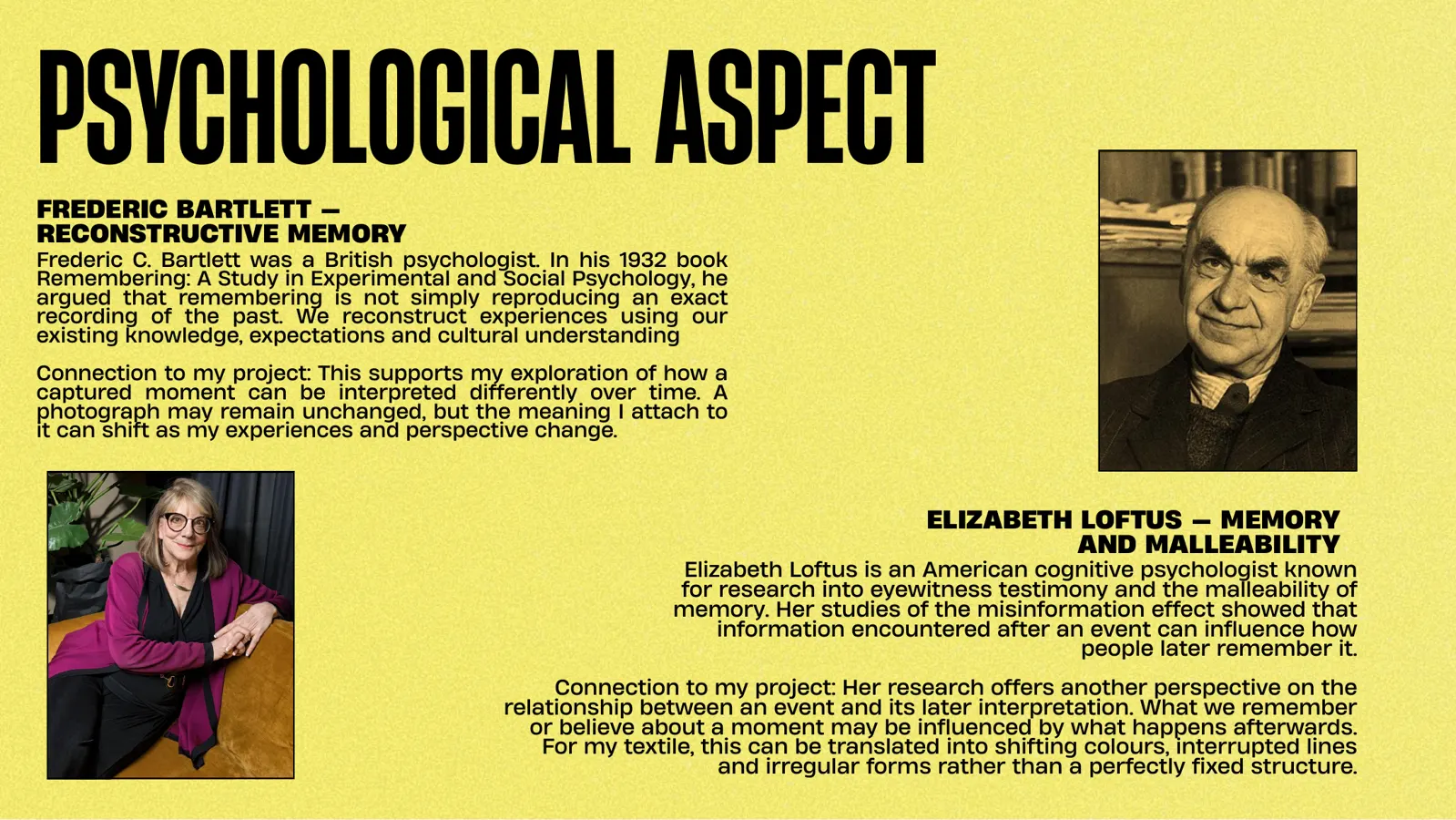
Frederic Bartlett, reconstructive memory

In Remembering (1932), Bartlett argued that remembering is not reproducing an exact recording of the past. We reconstruct experiences using our existing knowledge, expectations and cultural understanding. A photograph may remain unchanged, but the meaning I attach to it can shift as my perspective changes.

Psychology

Elizabeth Loftus, memory and malleability

Her studies of the misinformation effect showed that information encountered after an event can influence how people later remember it. For the textile, this translates into shifting colours, interrupted lines and irregular forms rather than a perfectly fixed structure.

Artist

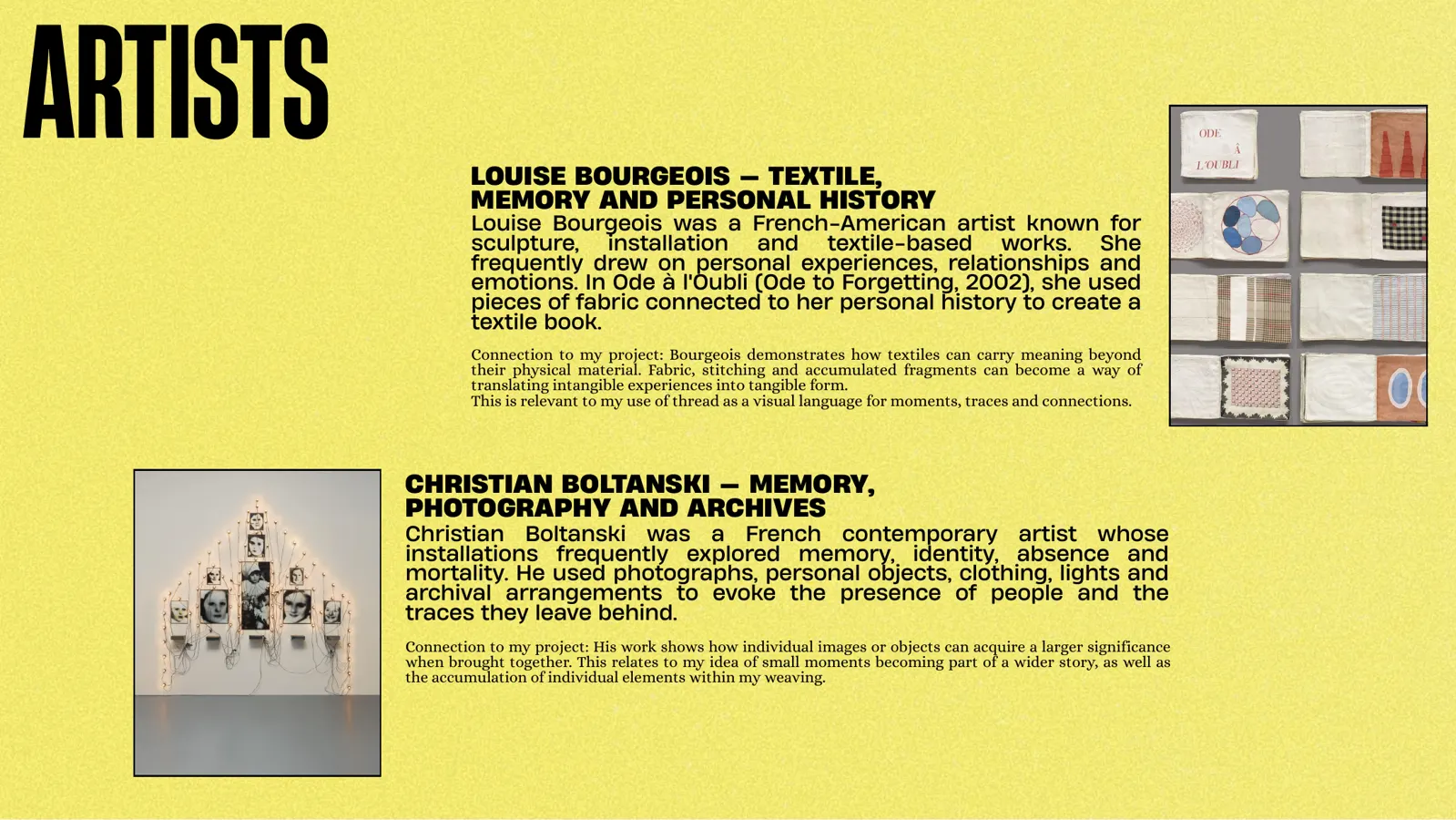
Louise Bourgeois, textile and personal history

In Ode à l’Oubli (2002) she used pieces of fabric connected to her personal history to create a textile book. Fabric, stitching and accumulated fragments can translate intangible experiences into tangible form, which is how I use thread as a visual language for moments, traces and connections.

Artist

Christian Boltanski, memory and archives

His installations used photographs, personal objects, clothing and lights to evoke the presence of people and the traces they leave behind. Individual images acquire a larger significance when brought together, as the individual elements in my weaving do.

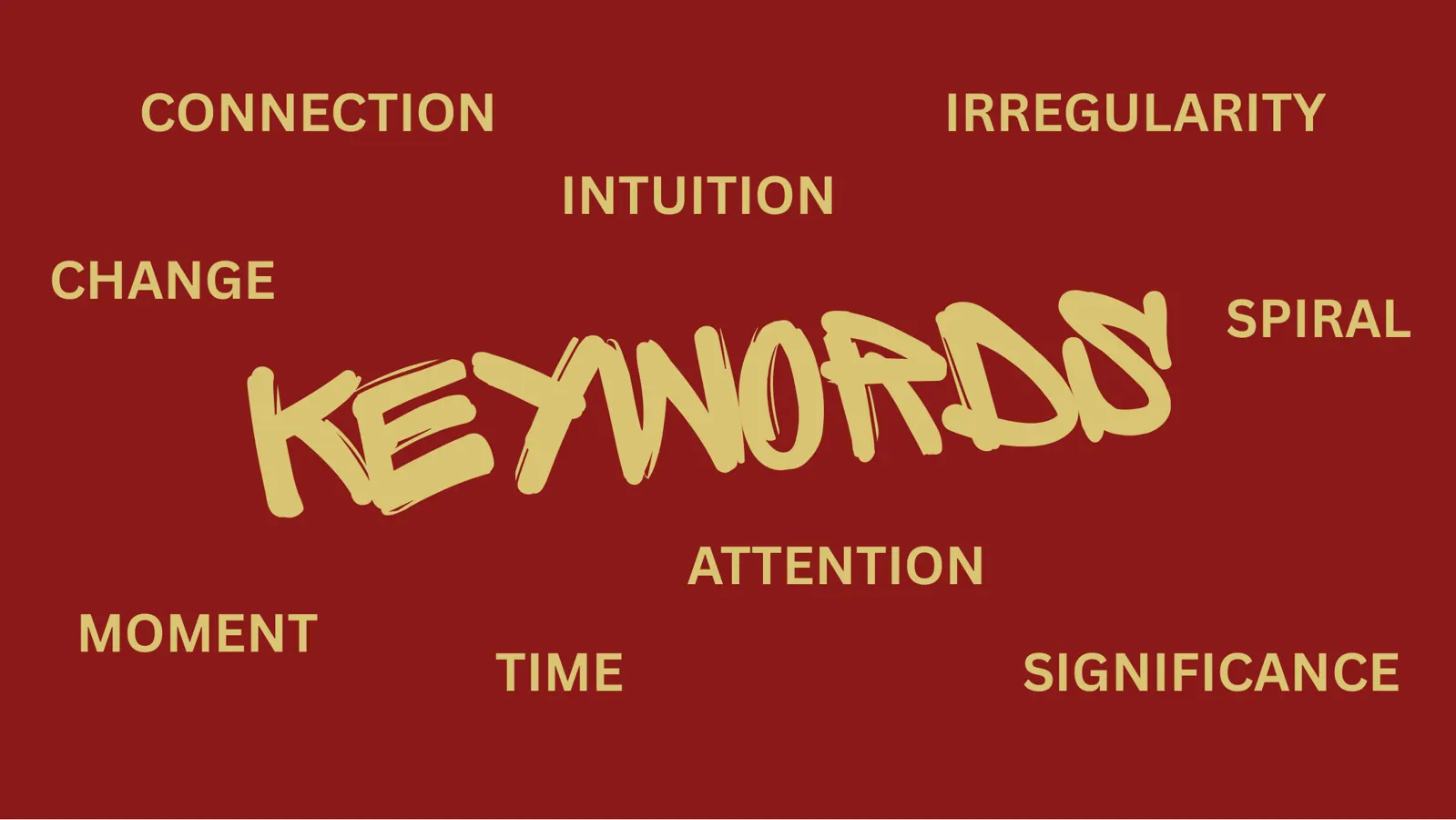
ConnectionIntuitionIrregularityChangeSpiralAttentionMomentTimeSignificance

08

Visual research

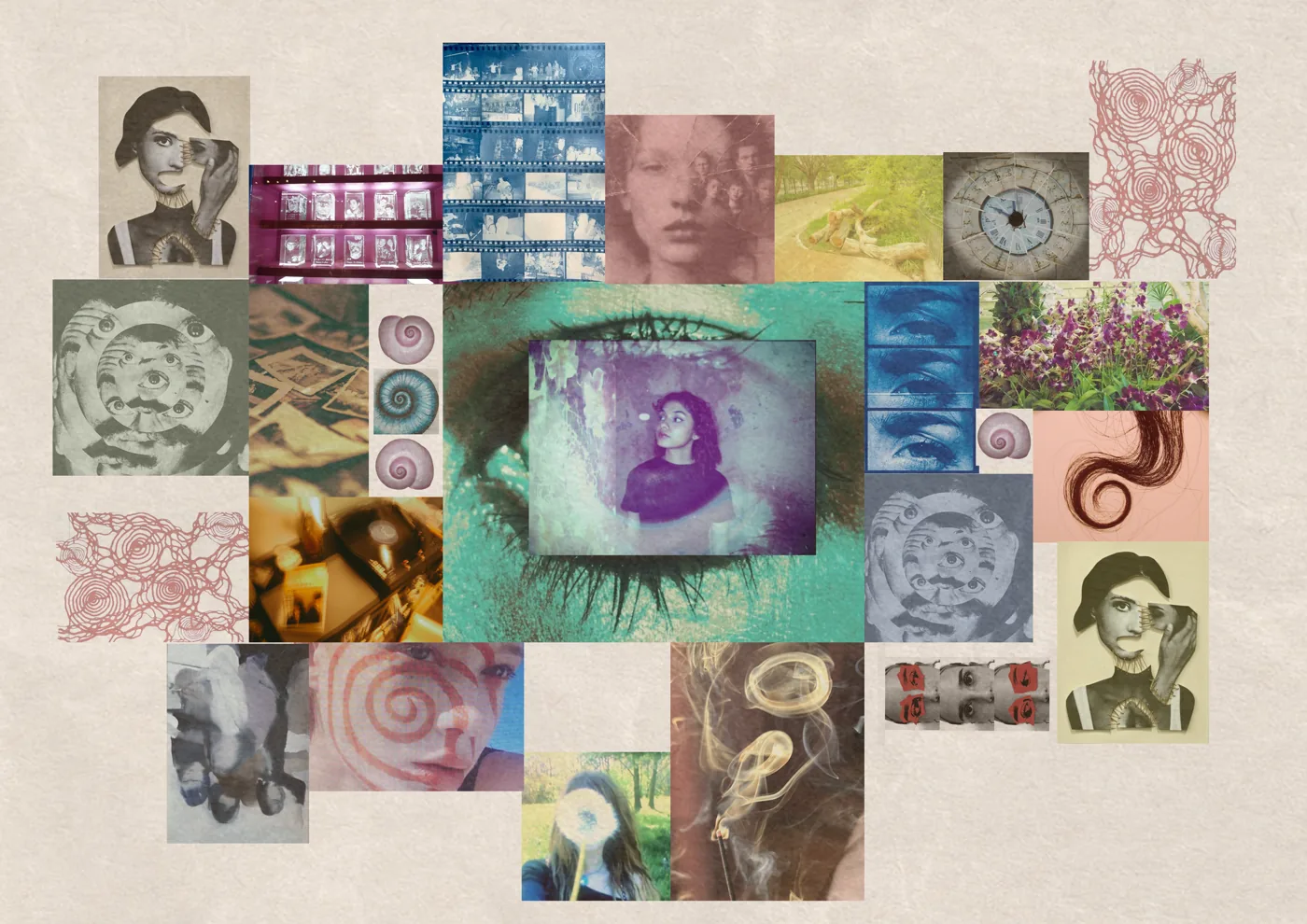
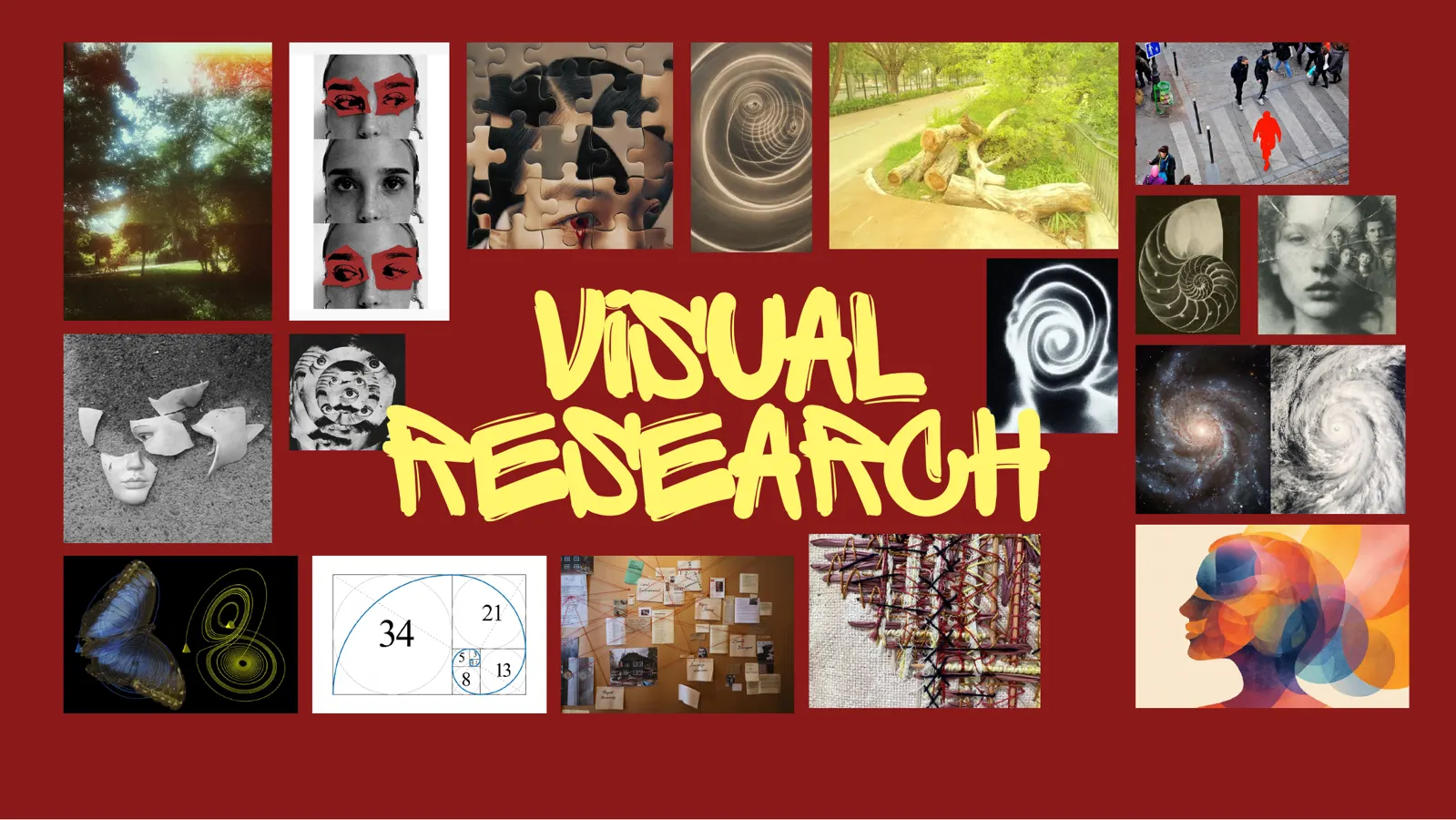
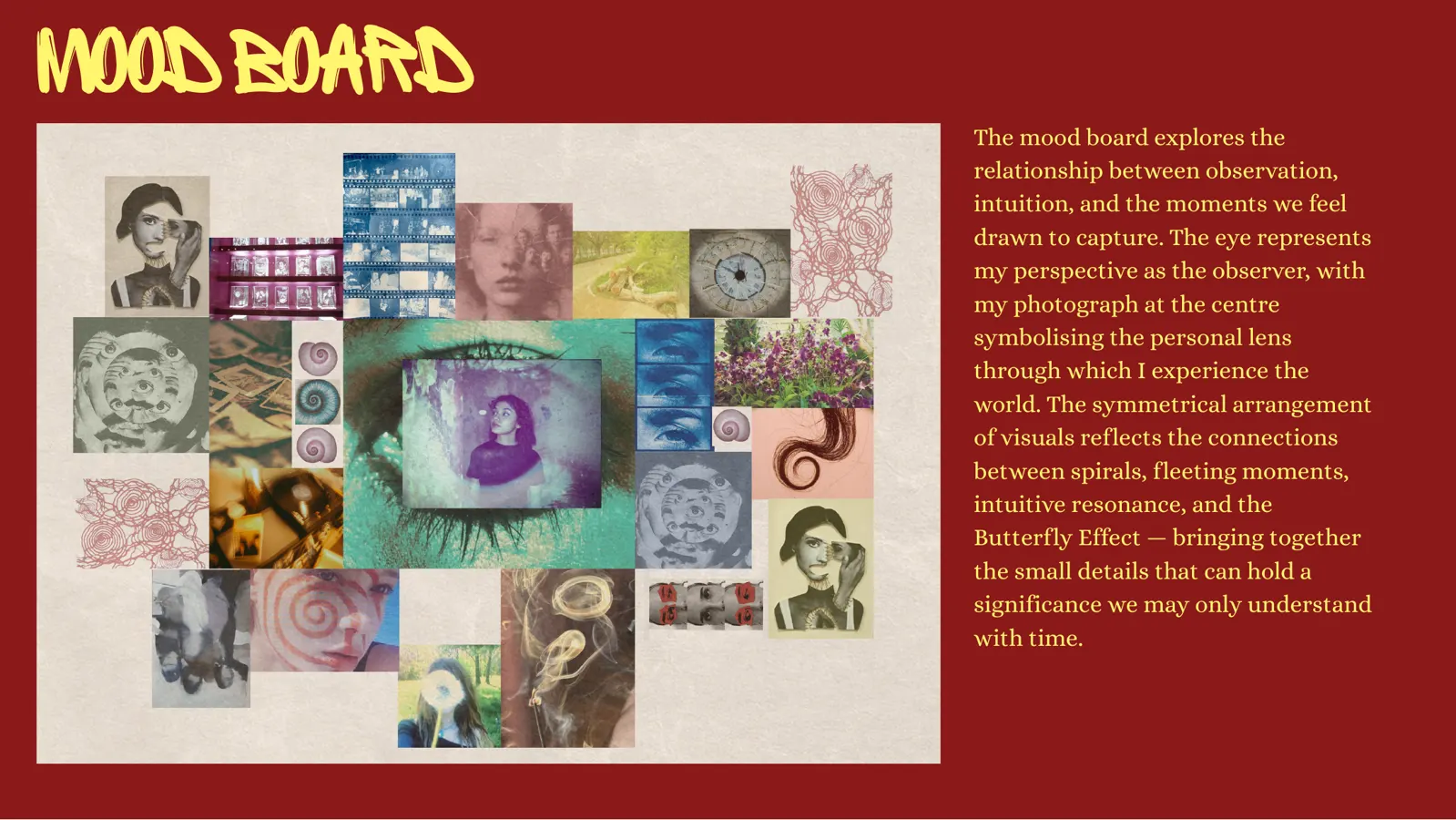
The mood board explores the relationship between observation, intuition, and the moments we feel drawn to capture. The eye represents my perspective as the observer, with my photograph at the centre symbolising the personal lens through which I experience the world.

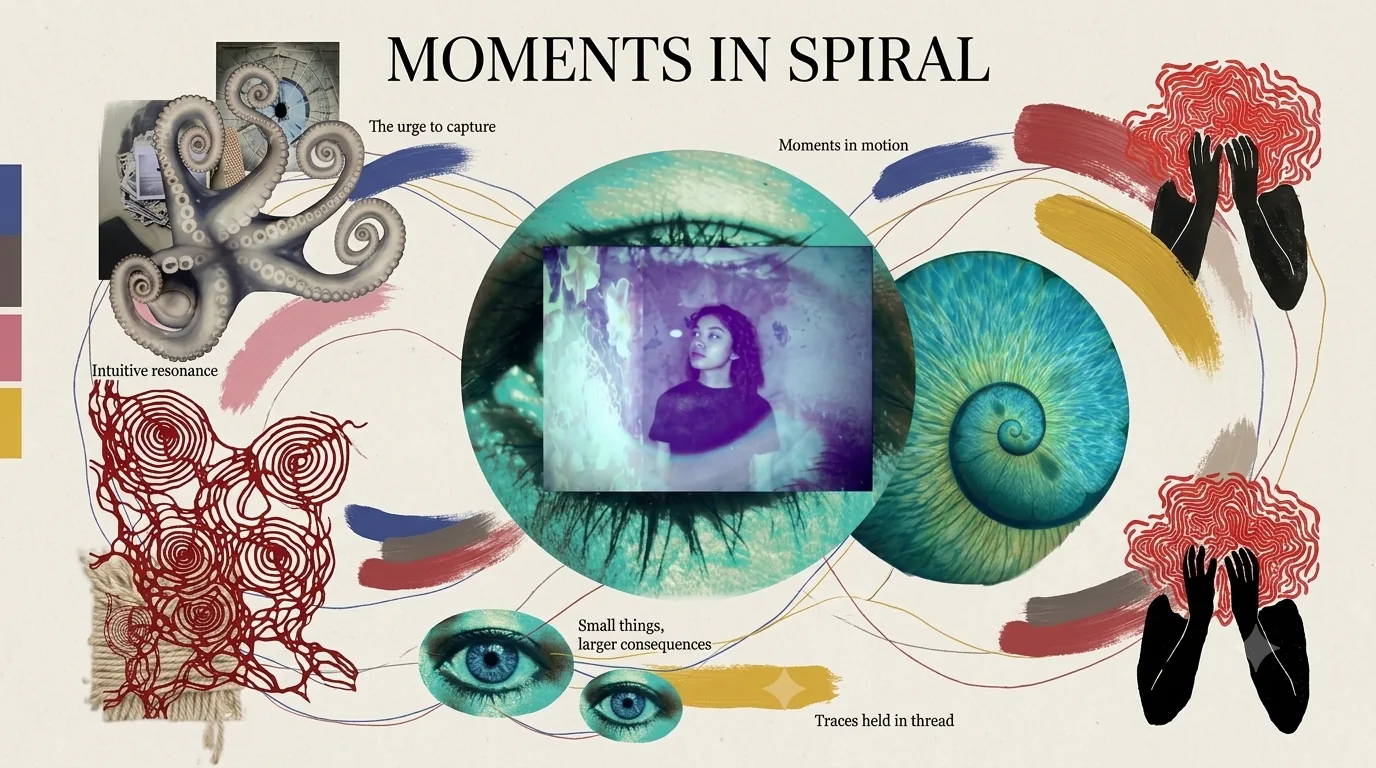
The symmetrical arrangement of visuals reflects the connections between spirals, fleeting moments, intuitive resonance, and the butterfly effect, bringing together the small details that can hold a significance we may only understand with time.

Colour palette of five vertical bands: deep blue, plum, red, pink and yellow.
Colour palette. Blue and yellow lead; red, pink and plum add warmth and depth.
Mood board collage of photographs, spirals, eyes and textures arranged symmetrically around a central portrait.
Mood board.
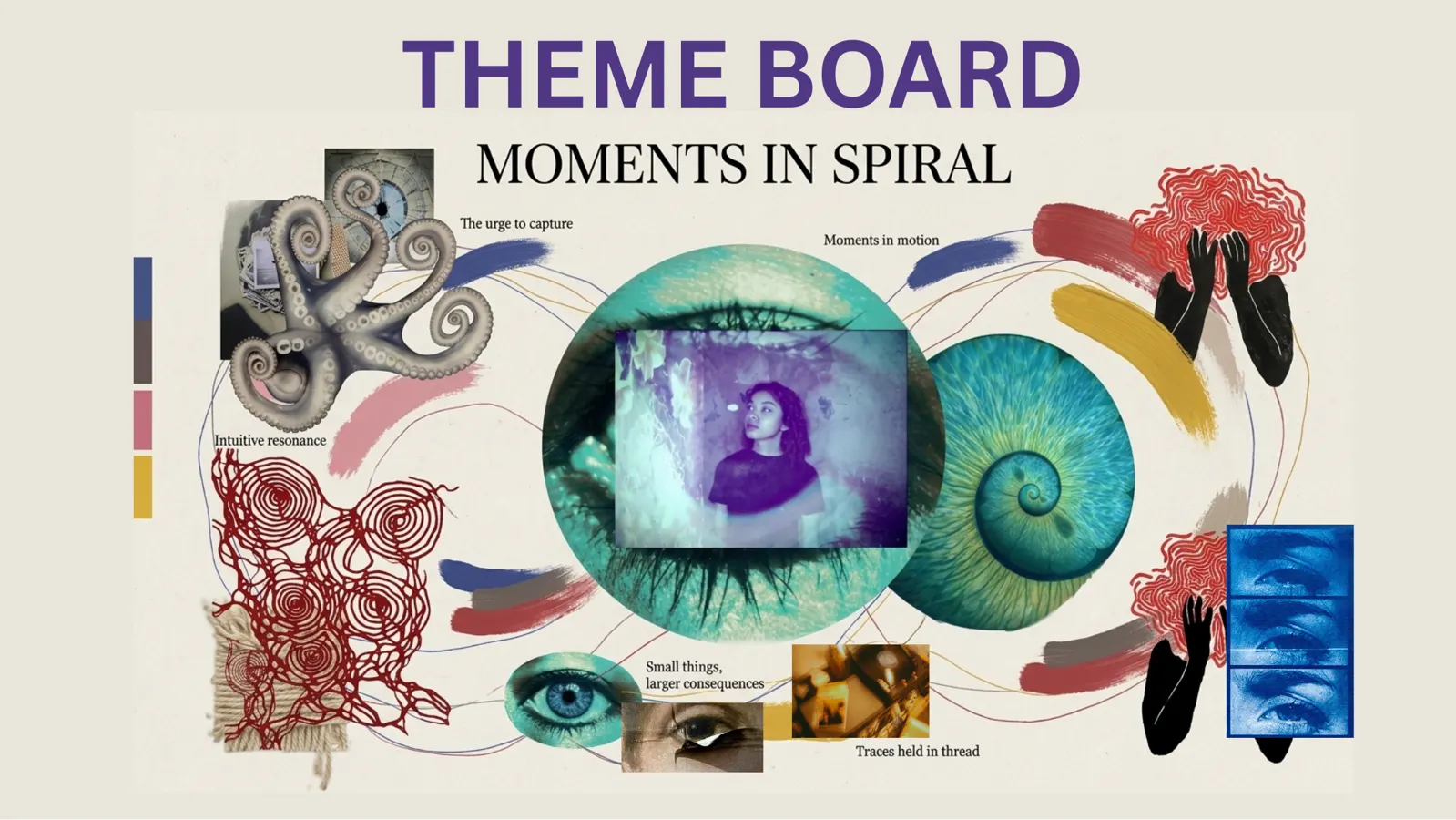
Theme board titled Moments in Spiral: a large eye at the centre, surrounded by red thread spirals, blue swatches and annotations.
Theme board.

09

Iterations

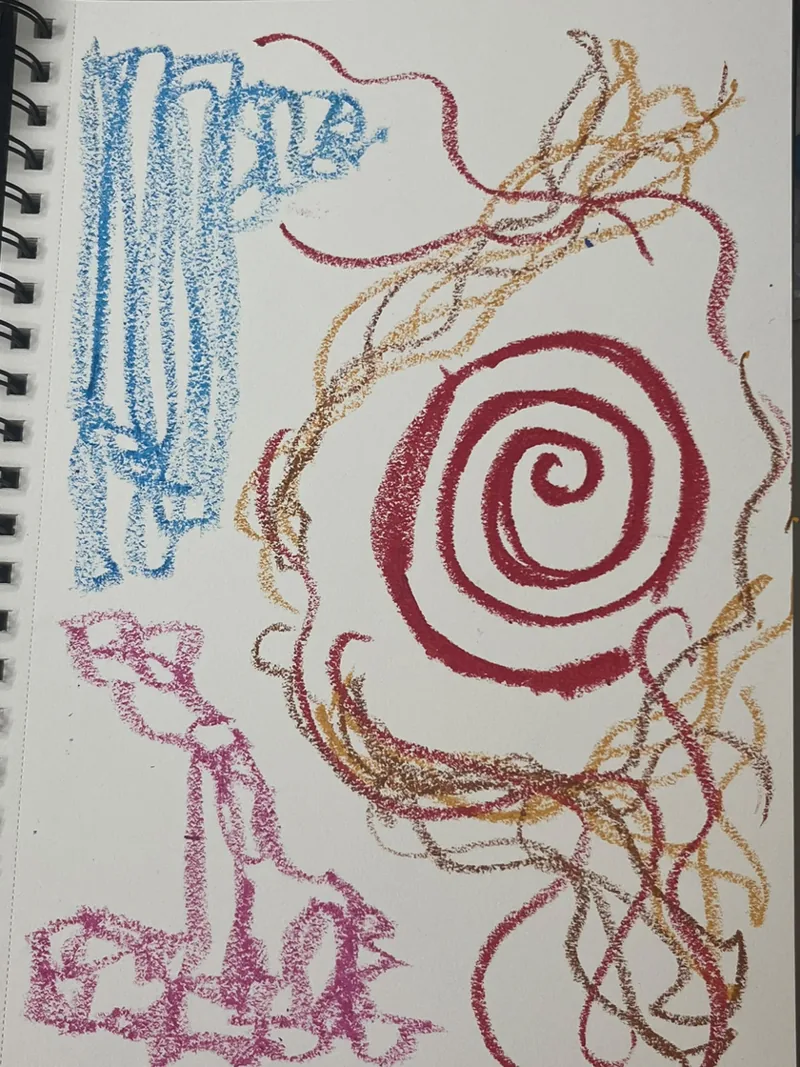
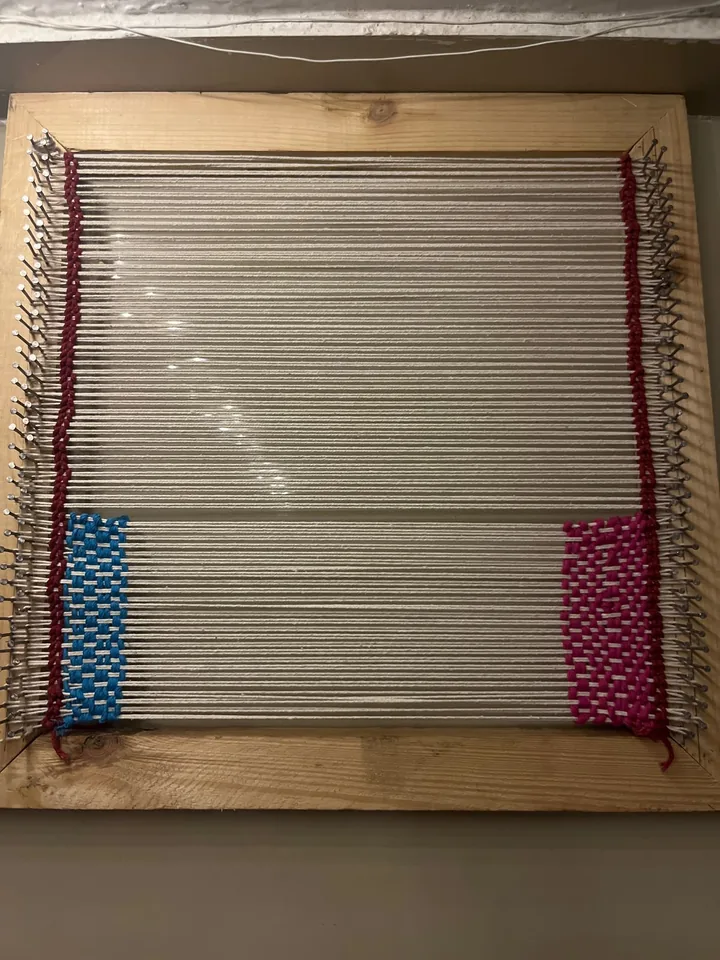
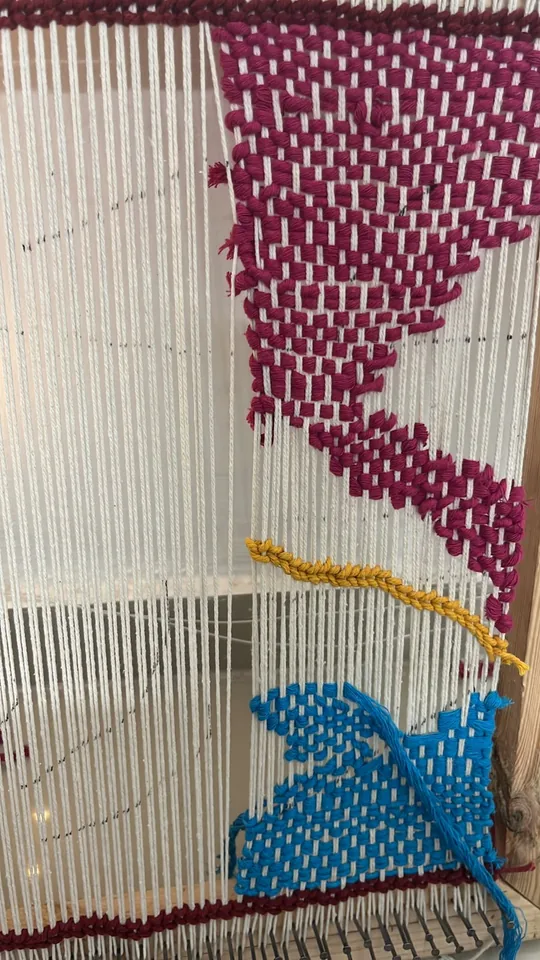
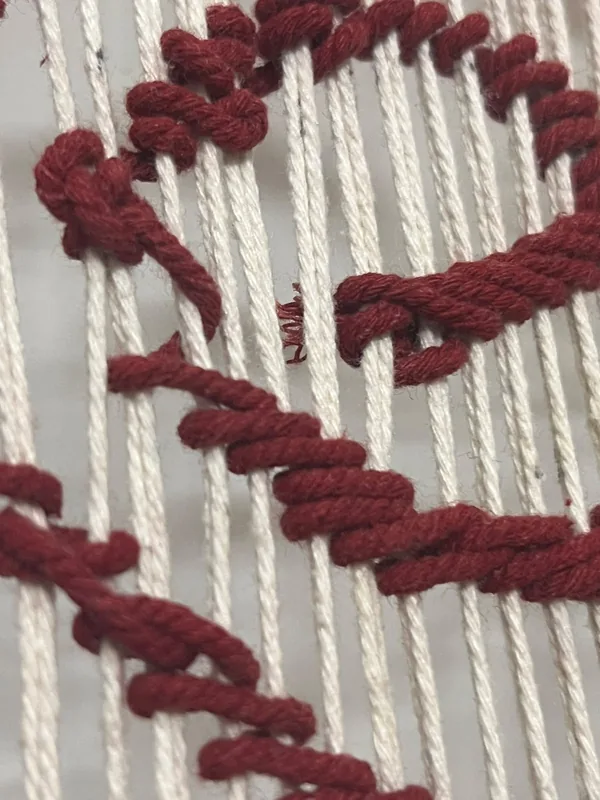
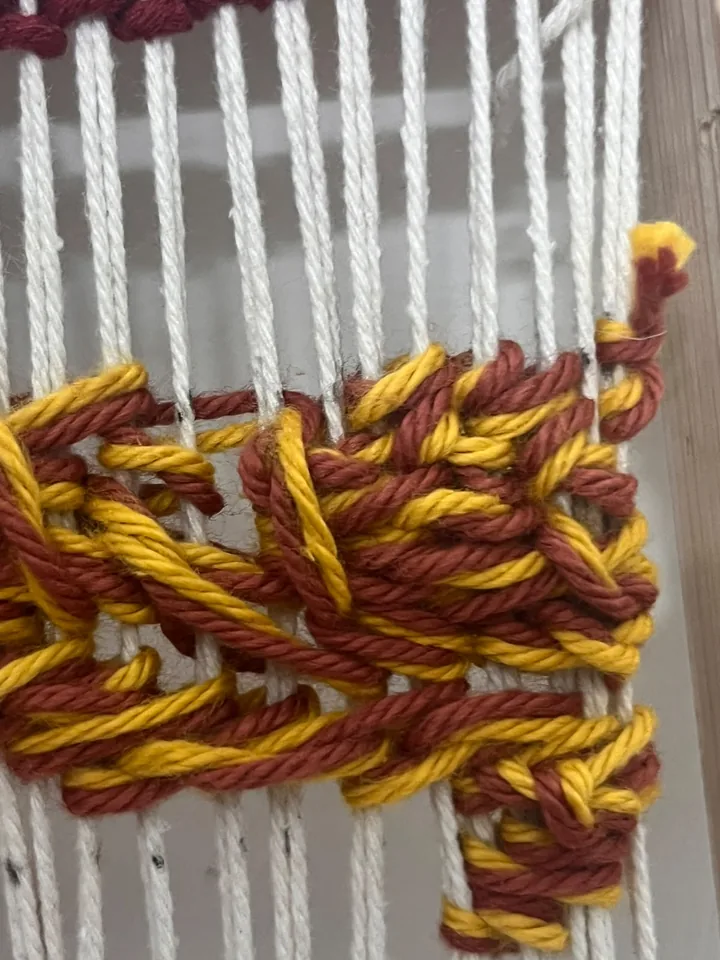
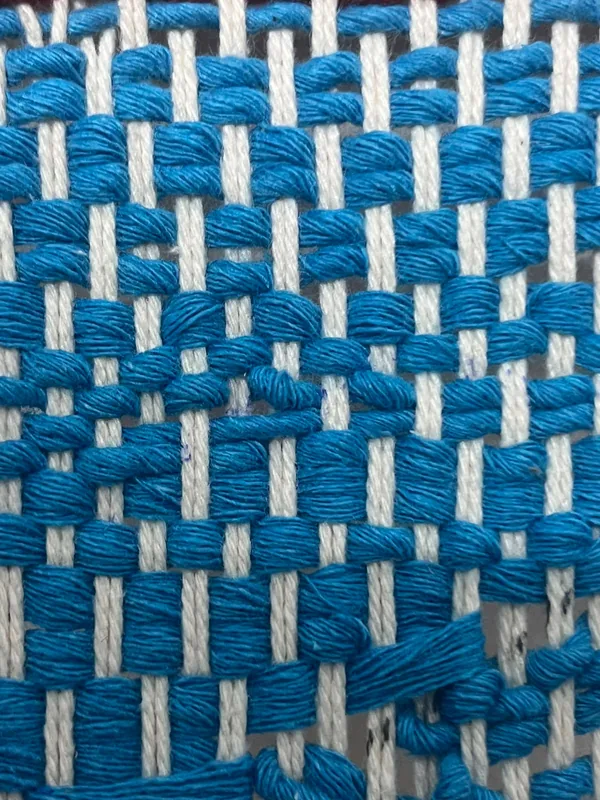
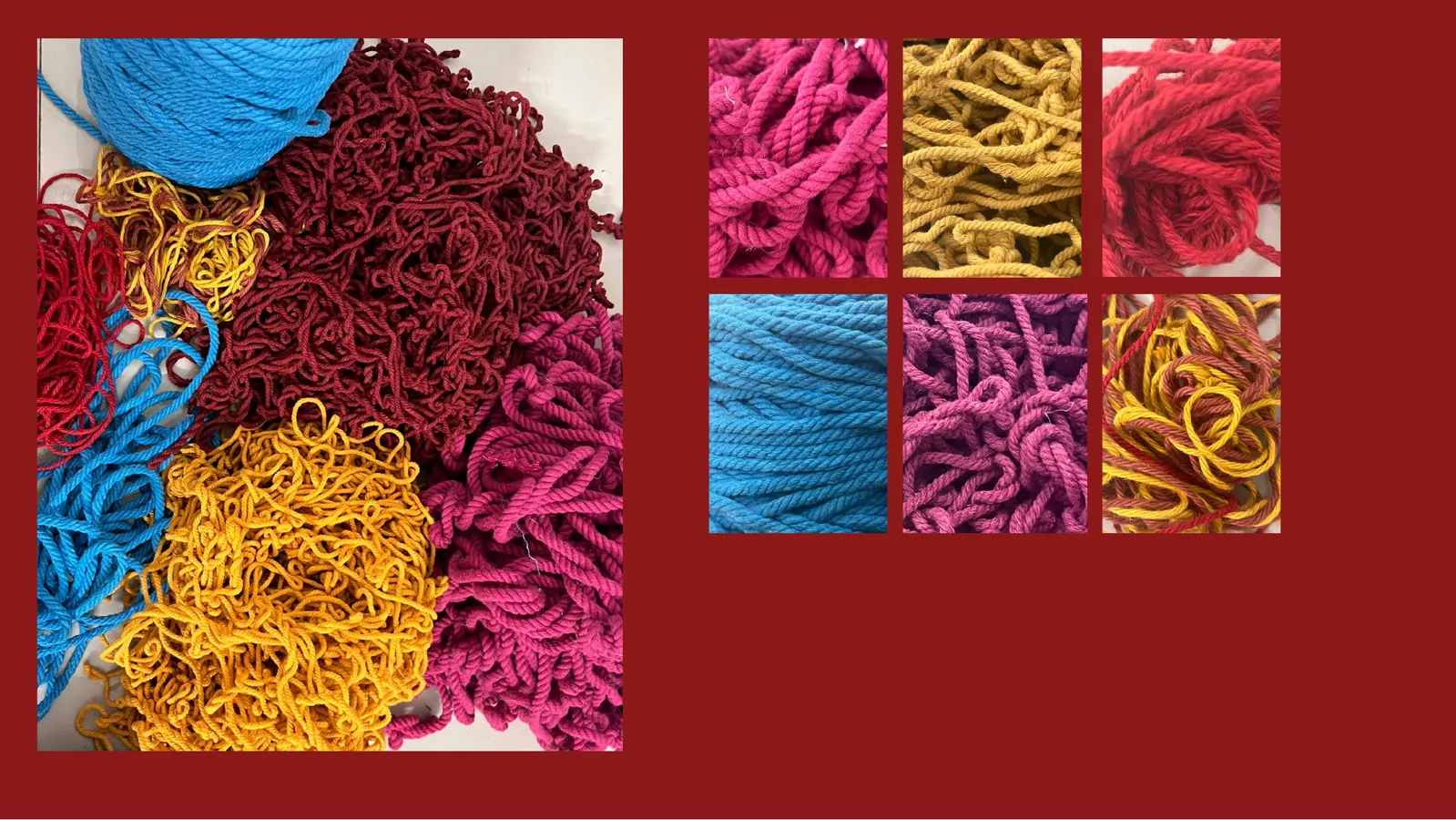
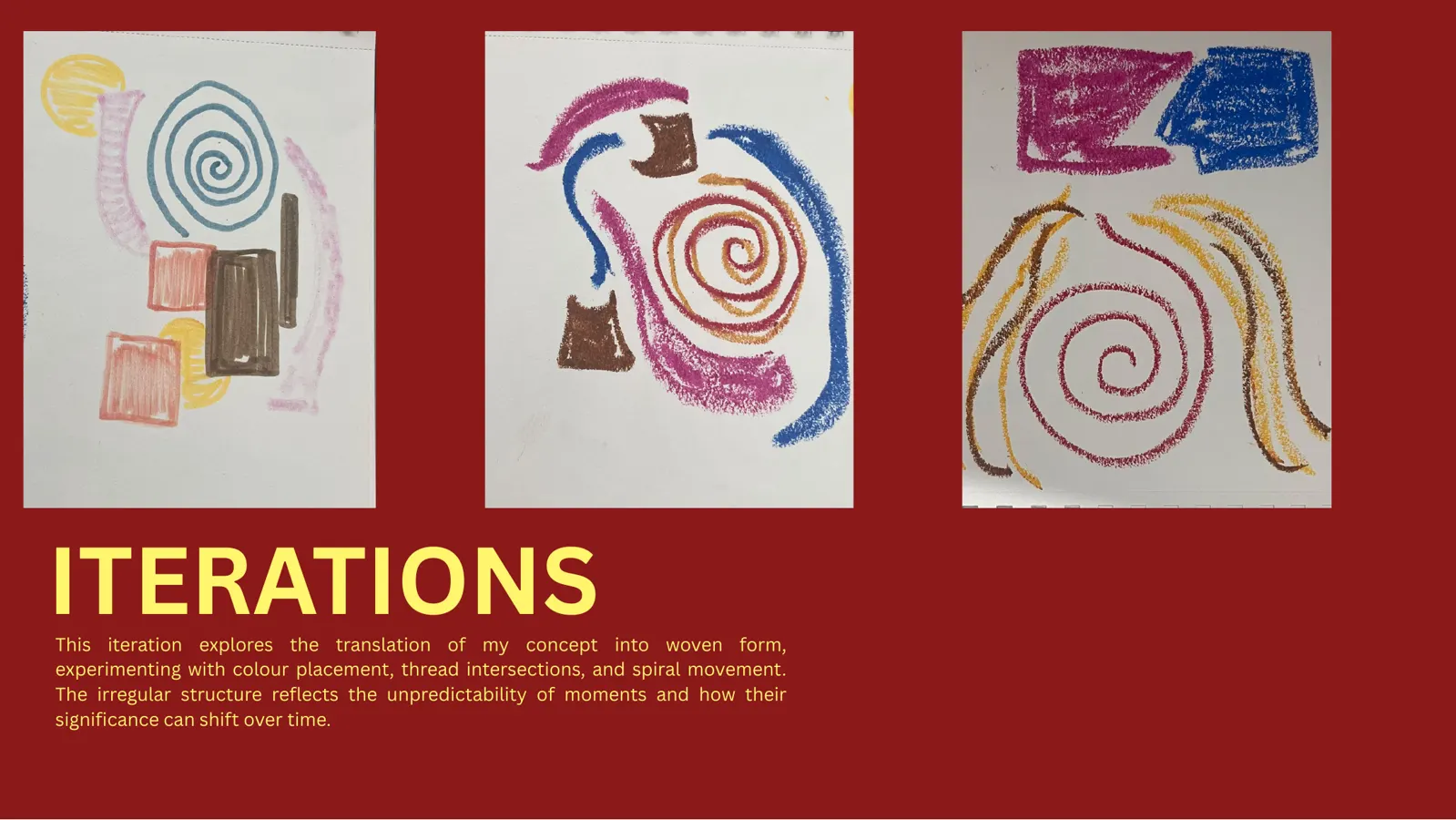
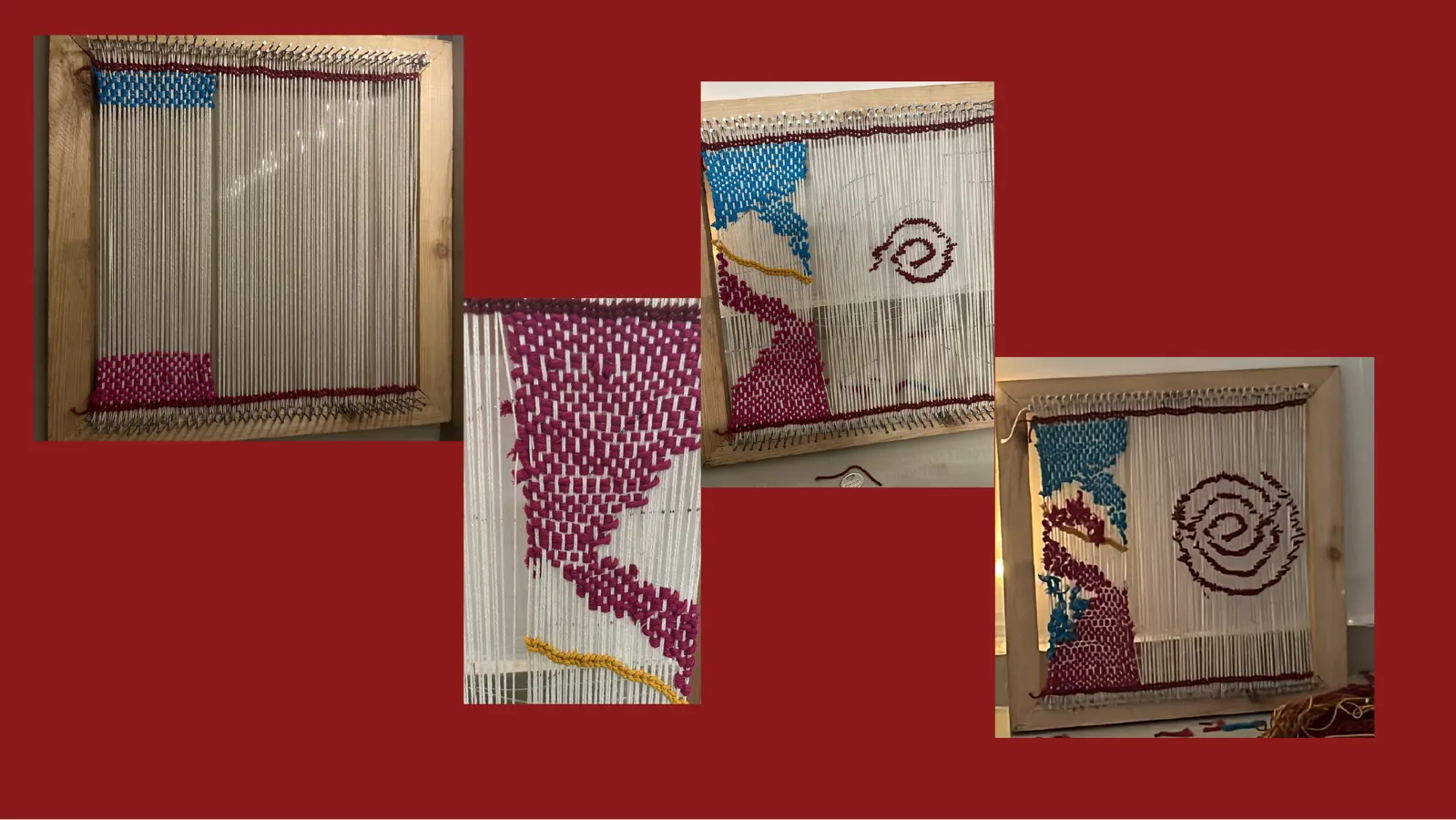
Translating the concept into woven form: experimenting with colour placement, thread intersections and spiral movement. The irregular structure reflects the unpredictability of moments and how their significance can shift over time.

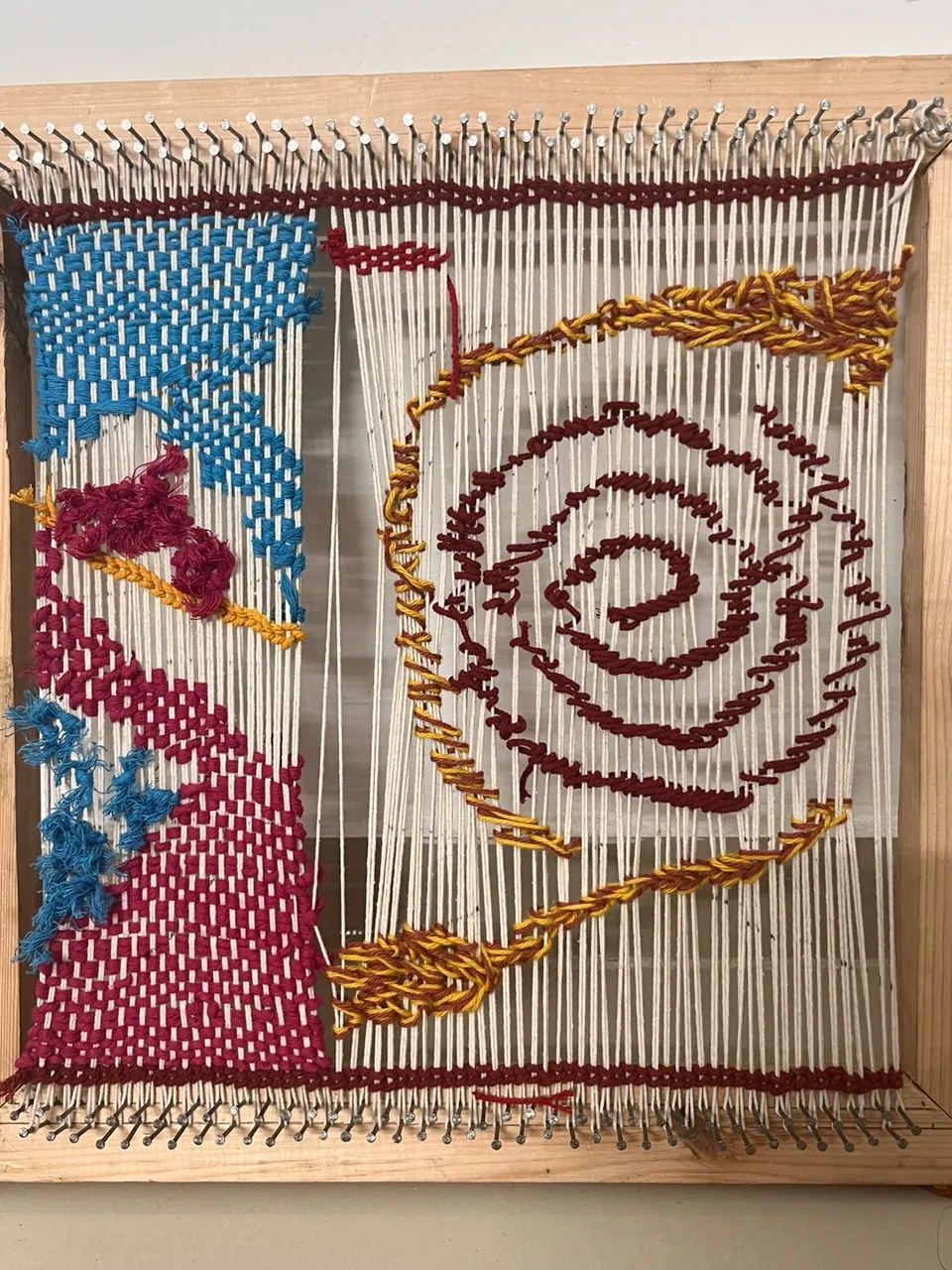
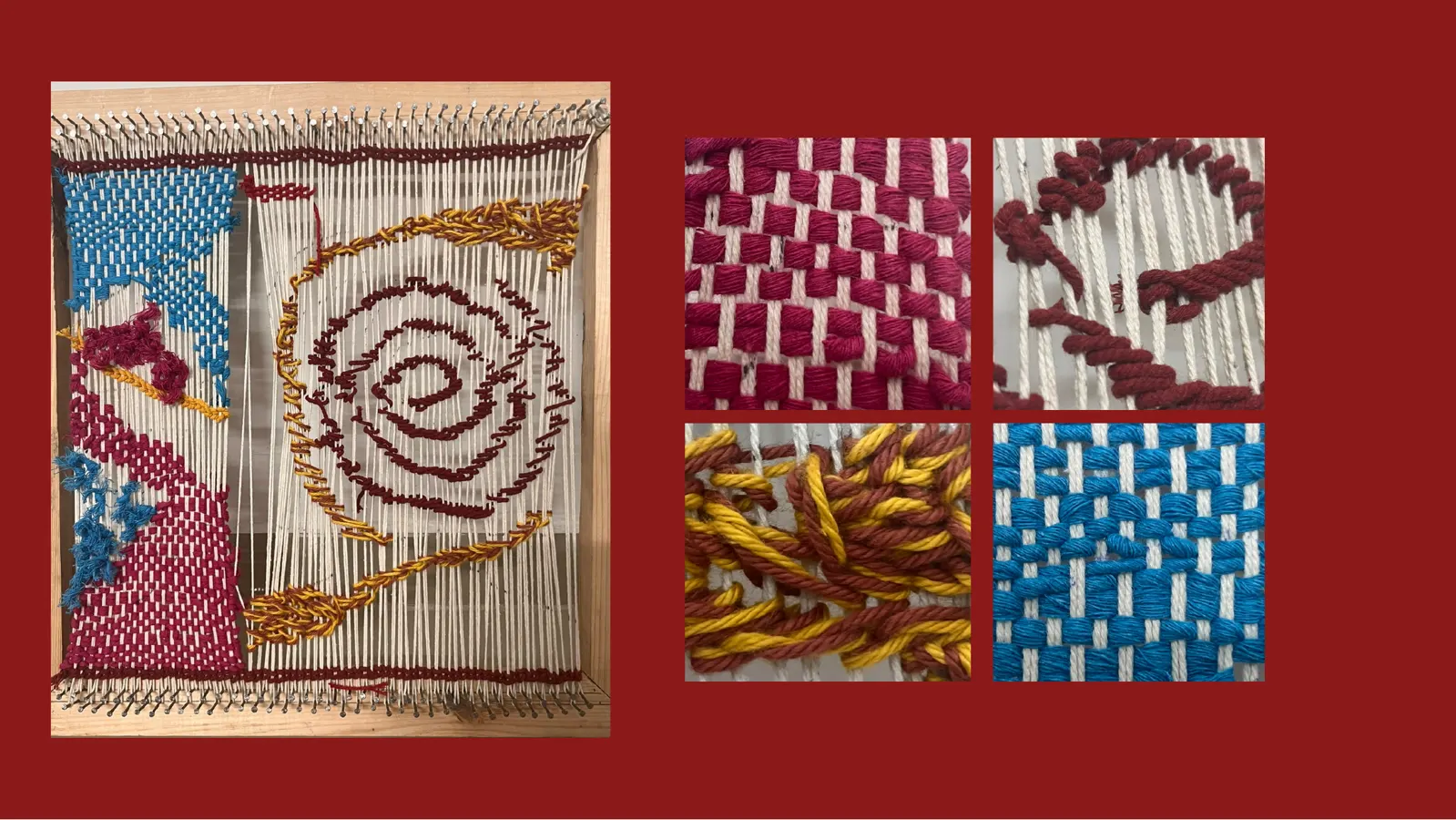
The final woven textile on the frame loom: crimson spiral at the centre, with blue, magenta and gold yarn radiating around it on a cream warp.
Final weave on the frame.

10

Final iteration

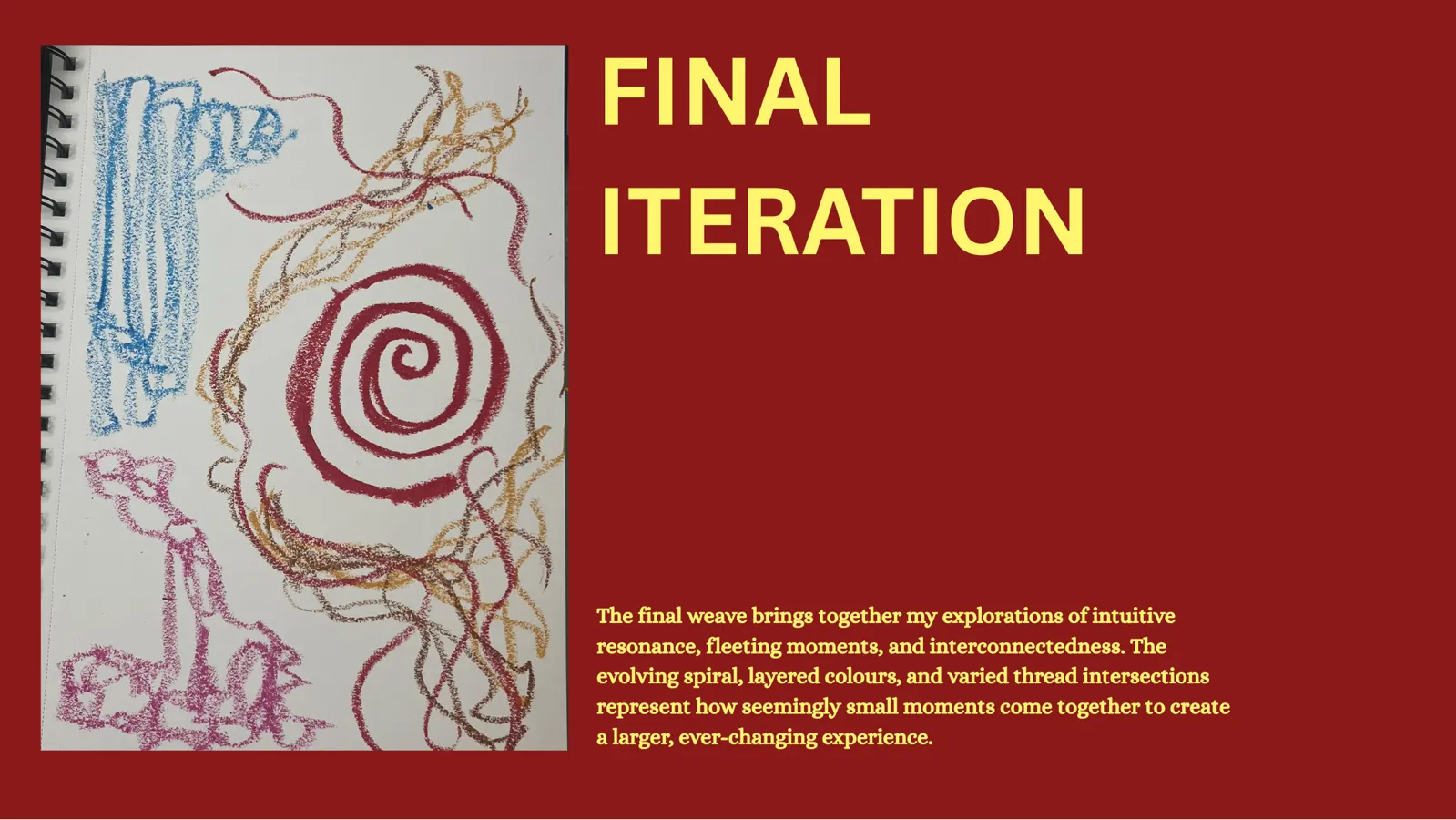
The final weave brings together my explorations of intuitive resonance, fleeting moments, and interconnectedness. The evolving spiral, layered colours, and varied thread intersections represent how seemingly small moments come together to create a larger, ever-changing experience.

11

Technical work

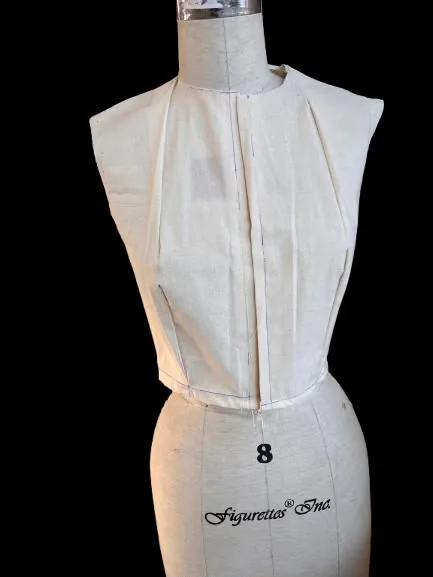
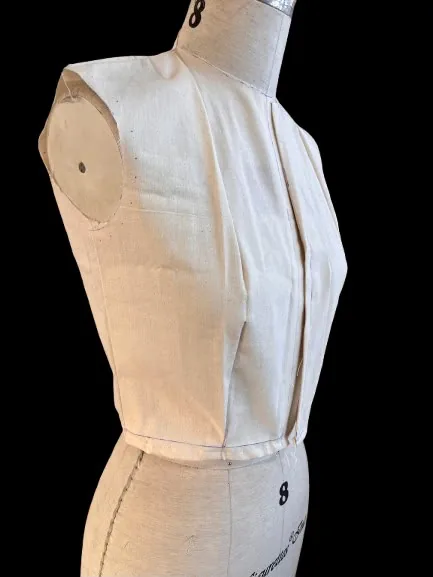
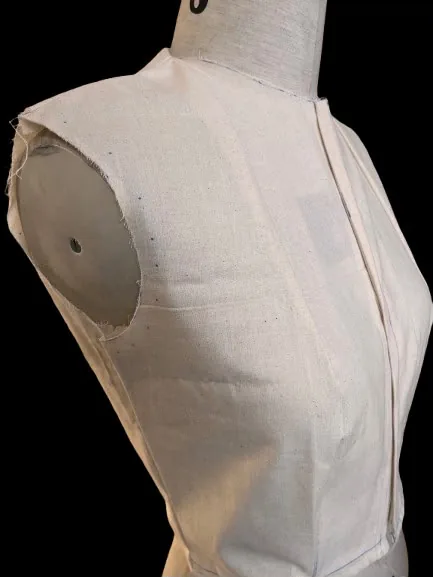
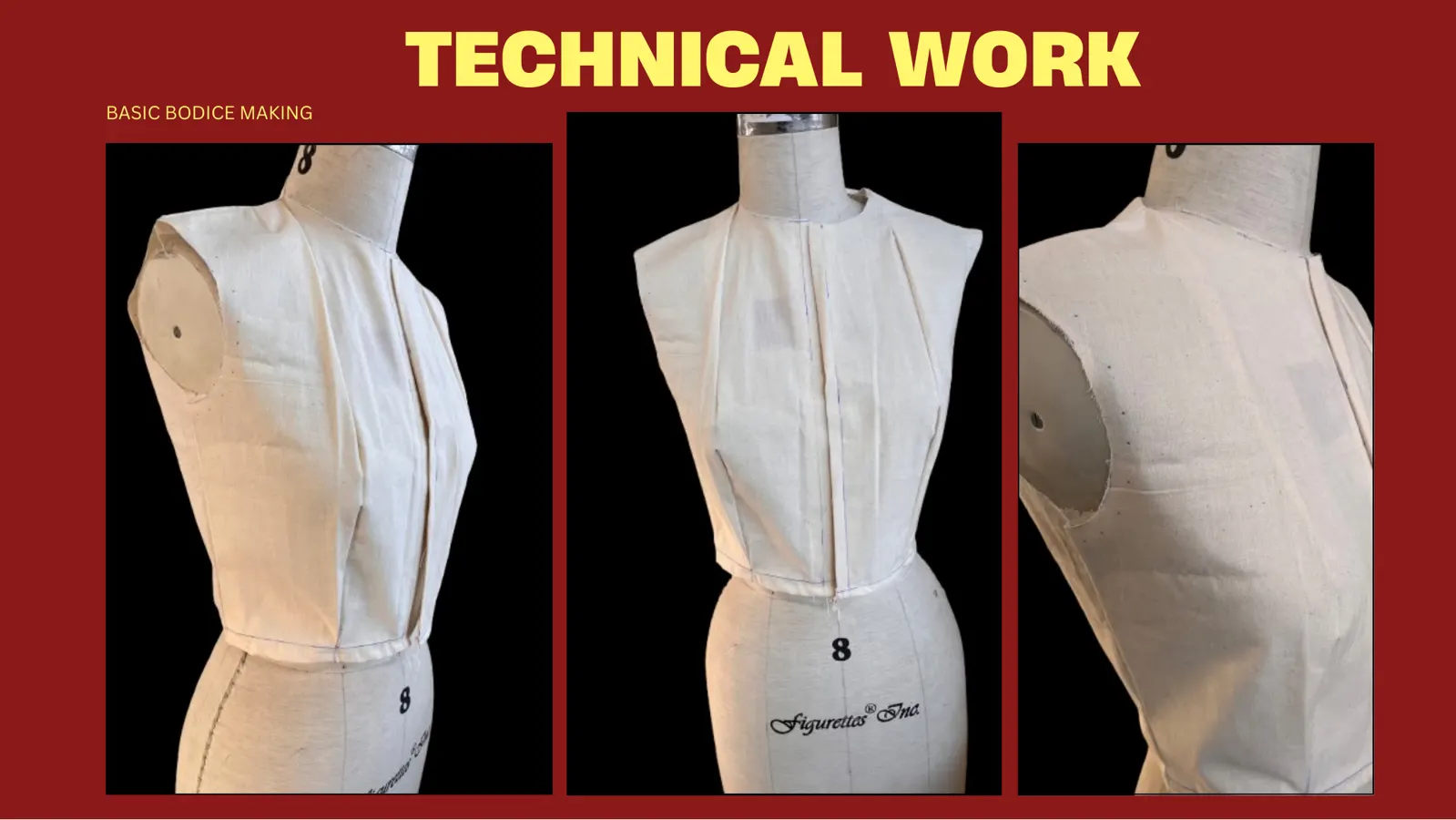
Basic bodice making. The bodice was constructed in calico and fitted on the dress form, with seam lines resolved before any surface work.

12

The jury deck

The full 31-page presentation as it was shown at jury. Step through it, or press play and let it run.

  1. Slide 1 of 31: Cover: Moments in Spiral.
  2. Slide 2 of 31: Introduction.
  3. Slide 3 of 31: Concept note.
  4. Slide 4 of 31: The starting point.
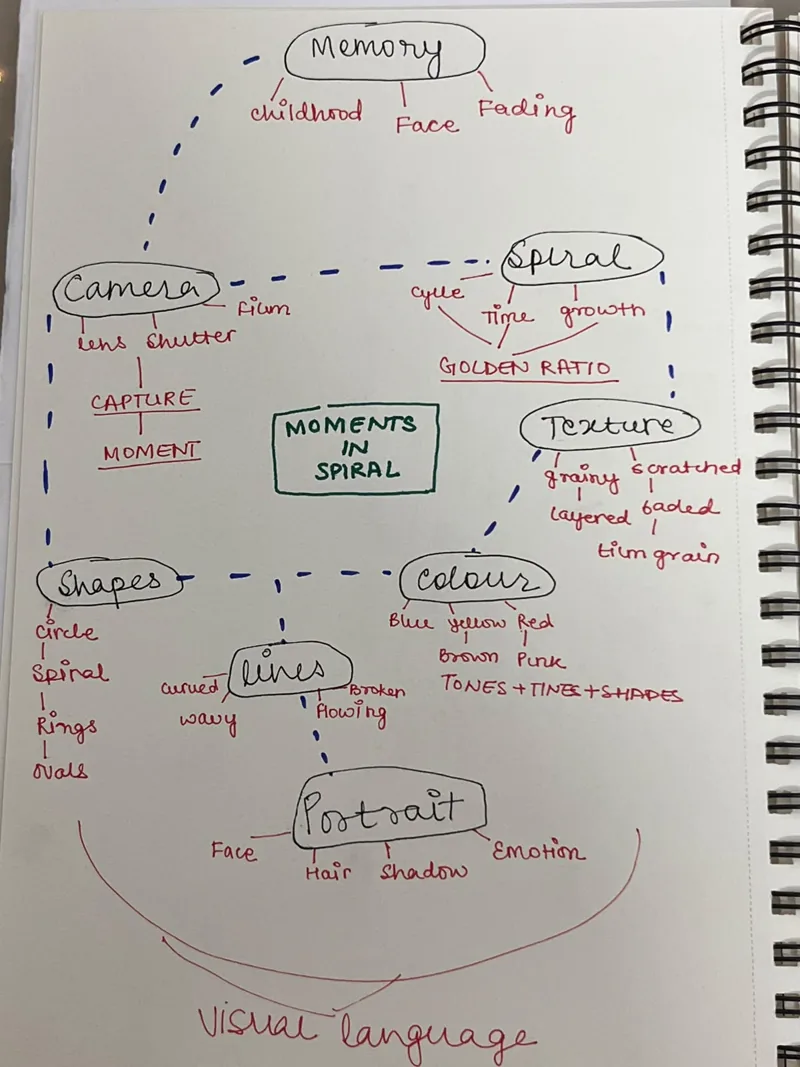
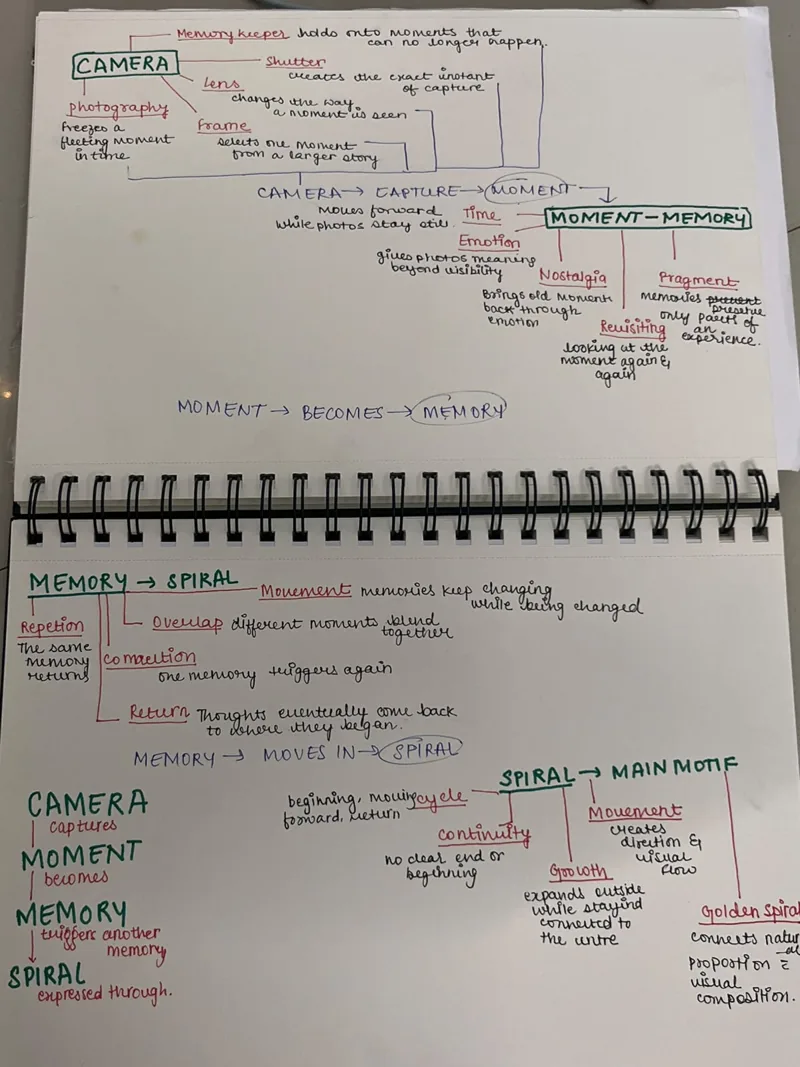
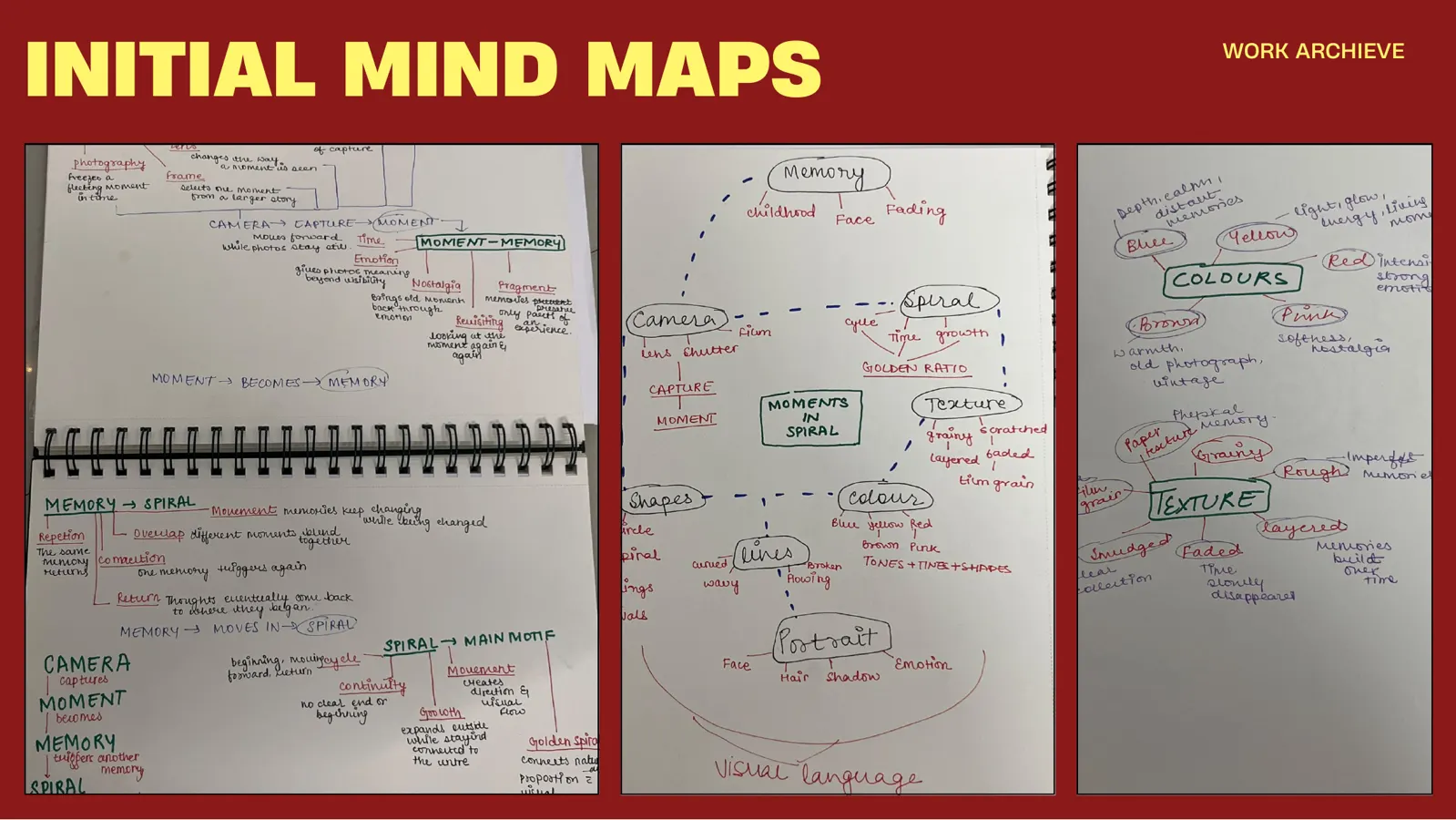
  5. Slide 5 of 31: Initial mind maps.
  6. Slide 6 of 31: Moments.
  7. Slide 7 of 31: From moments to spiral.
  8. Slide 8 of 31: Why a spiral?.
  9. Slide 9 of 31: Circle versus spiral.
  10. Slide 10 of 31: Spiral in nature.
  11. Slide 11 of 31: Fibonacci and the golden spiral.
  12. Slide 12 of 31: Imperfect spiral.
  13. Slide 13 of 31: Shift in my research.
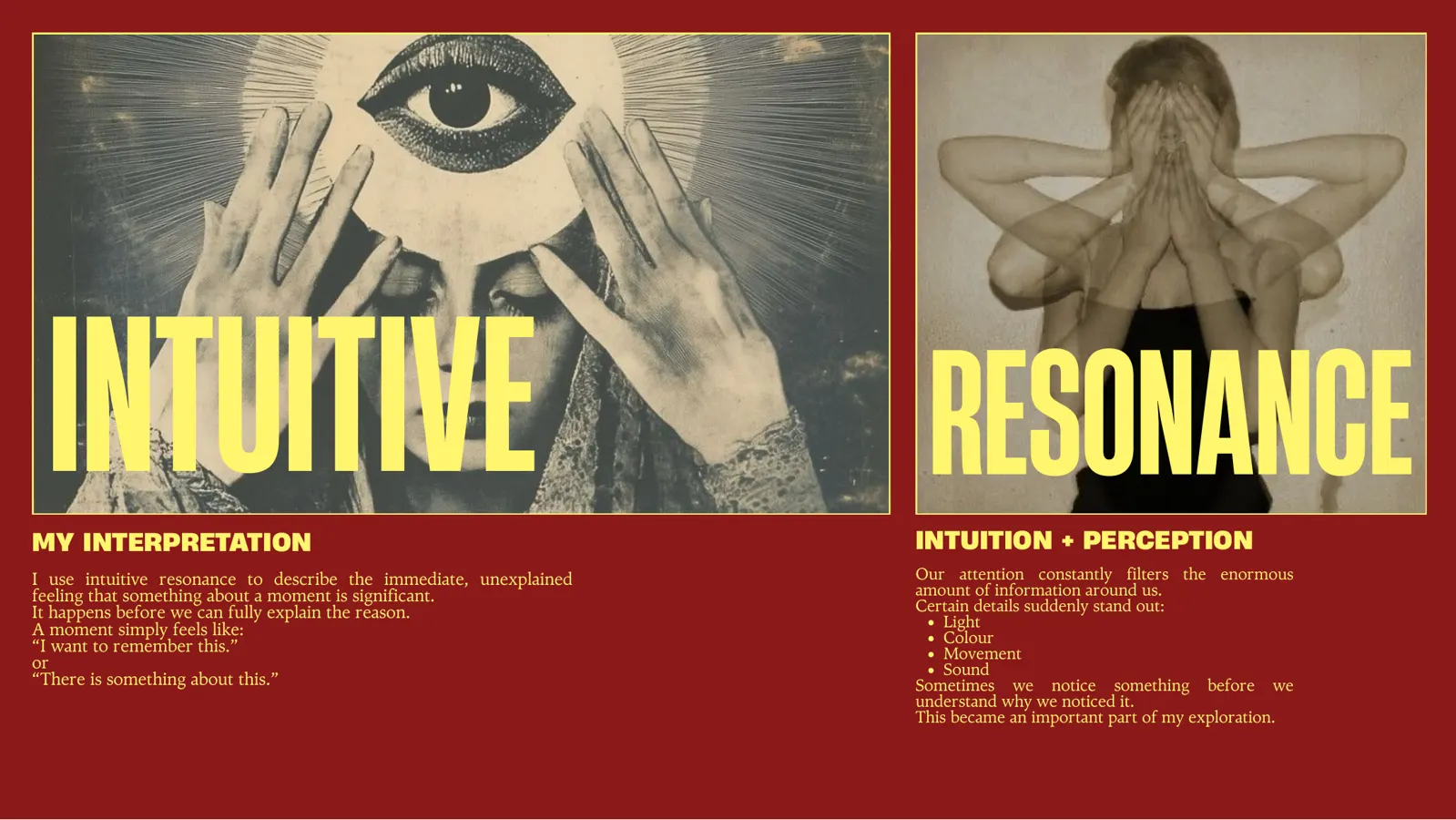
  14. Slide 14 of 31: Intuitive resonance.
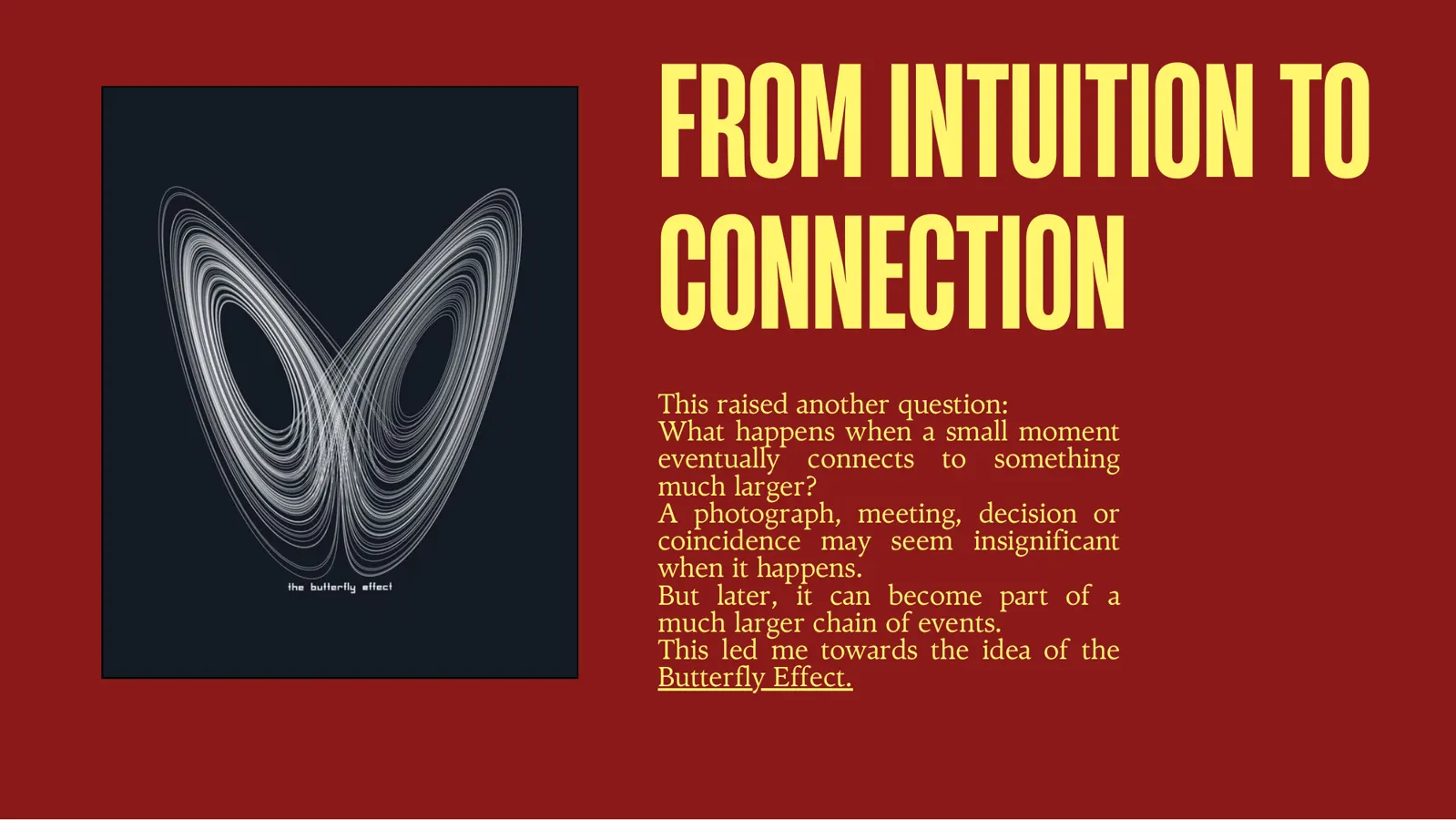
  15. Slide 15 of 31: From intuition to connection.
  16. Slide 16 of 31: Butterfly effect.
  17. Slide 17 of 31: Research on intuition, attention and perception.
  18. Slide 18 of 31: Psychological aspect: Bartlett and Loftus.
  19. Slide 19 of 31: Artists: Bourgeois and Boltanski.
  20. Slide 20 of 31: Keywords.
  21. Slide 21 of 31: Visual research.
  22. Slide 22 of 31: Colour palette.
  23. Slide 23 of 31: Mood board.
  24. Slide 24 of 31: Theme board.
  25. Slide 25 of 31: Yarn studies.
  26. Slide 26 of 31: Iterations.
  27. Slide 27 of 31: Final iteration.
  28. Slide 28 of 31: On the loom.
  29. Slide 29 of 31: Final weave details.
  30. Slide 30 of 31: Technical work: basic bodice making.
  31. Slide 31 of 31: Reflection.
1 / 31

All 31 slides are shown in order above.

13

Reflection

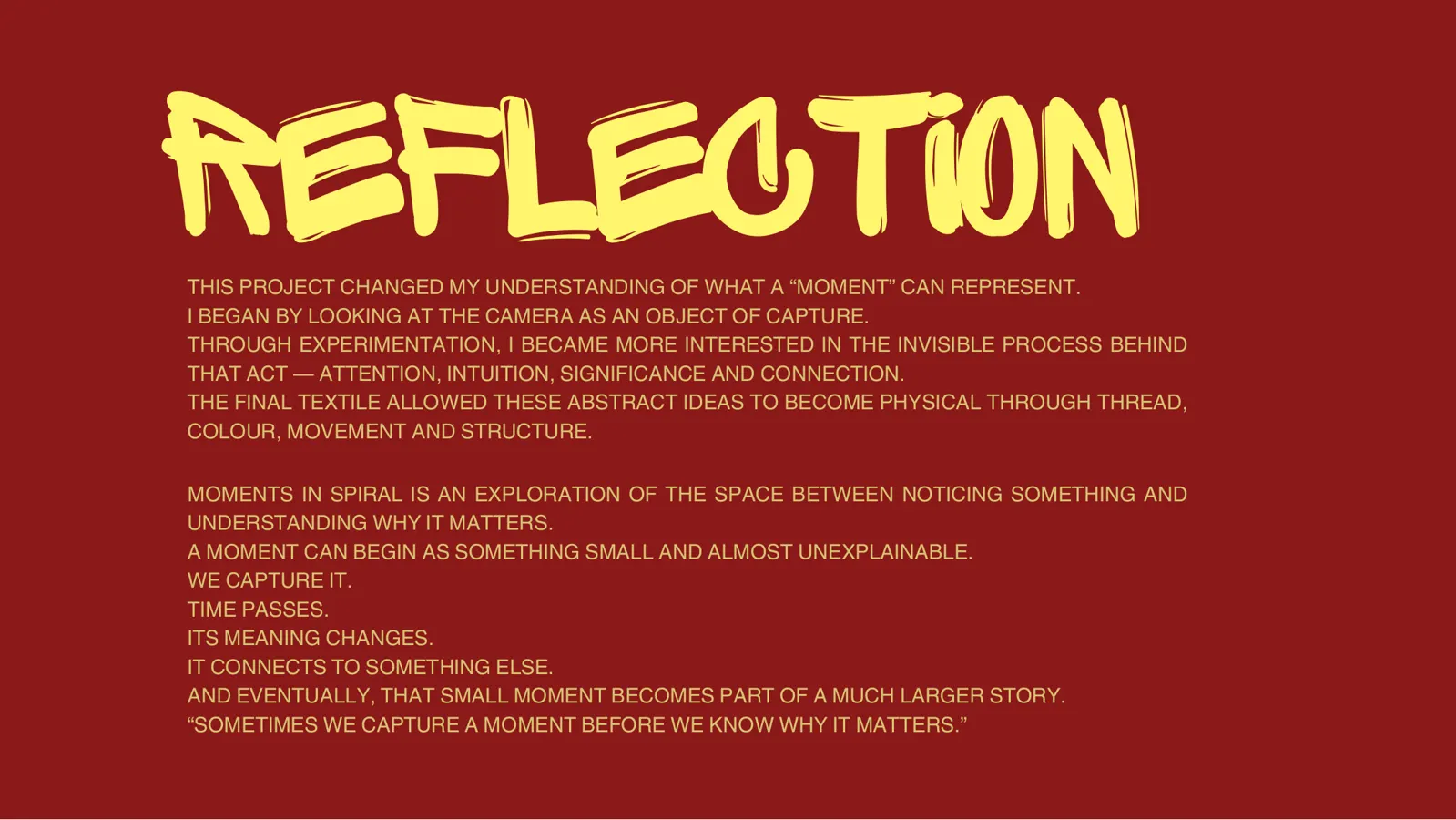
This project changed my understanding of what a “moment” can represent. I began by looking at the camera as an object of capture. Through experimentation, I became more interested in the invisible process behind that act: attention, intuition, significance and connection. The final textile allowed these abstract ideas to become physical through thread, colour, movement and structure.

Moments in Spiral is an exploration of the space between noticing something and understanding why it matters.

  • A moment can begin as something small and almost unexplainable.
  • We capture it.
  • Time passes.
  • Its meaning changes.
  • It connects to something else.
  • And eventually, that small moment becomes part of a much larger story.

“Sometimes we capture a moment before we know why it matters.”